
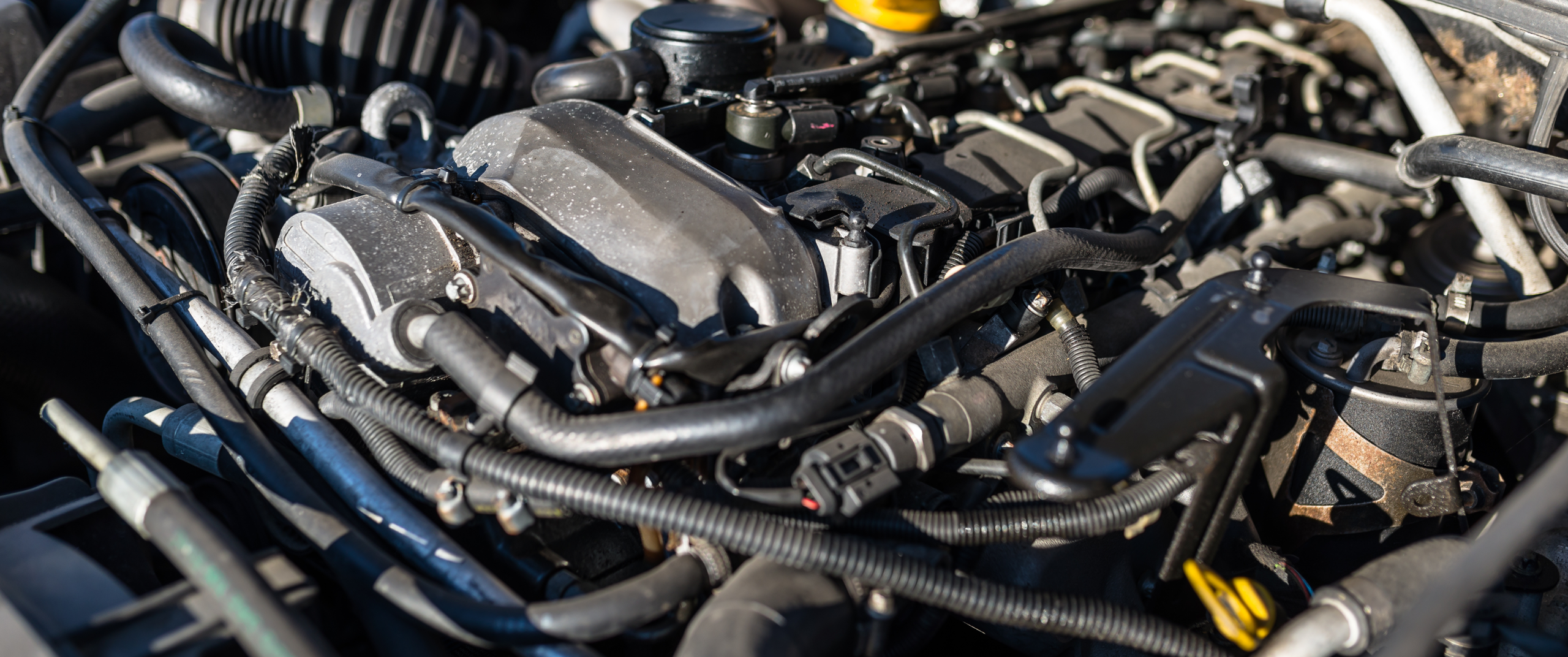
Is your vehicle stalling while idling? A vacuum leak could be the silent enemy of this maddening symptom. Here at HCS Auto Repair, we know how unnerving it is when your engine stalls unexpectedly, particularly when you’re at a traffic light crossroads or at a parking lot.
A vacuum leak can usher in some bad news for your engine’s performance:
Rough idling – Your engine struggles to maintain a steady RPM
Unexpected stalling – Your car might shut off without warning
Poor fuel efficiency – Your engine works harder than necessary
Check engine light – Various error codes may appear on your dashboard
These symptoms will usually indicate air entering the system of your engine where it is not desired. Consider your engine as a finely balanced machine, where if the unwanted air finds entrance into any kind of vacuum leak, disturbance occurs, and your engine “runs lean” (too much air, less fuel).
Detecting and fixing vacuum leaks is actually important for the health of your vehicle. If left alone, these leaks may cause:
- Increased fuel consumption
- Reduced engine power
- Potential damage to engine components
- Failed emissions tests
The good news? With the proper diagnostic technique, vacuum leaks can be detected and repaired before they become a critical problem. Let us discover how you can detect these annoying leaks and get your engine purring like new once again.
Learning About Vacuum Leaks and Their Effect on Engine Performance
Your engine must have an airborne fuel mixture ratio that is actually balanced to perform optimally. This vacuum leak tilts that balance by introducing unmetered air into the system, causing an engine stall, particularly during idle.
Signs of a Vacuum Leak:
- Random engine stalling
- Rough idle behavior
- Check engine light activation
- Lean running conditions
- Inconsistent mass air flow sensor readings
The traditional method of detecting vacuum leaks involves spraying carburetor cleaner around suspected areas. When the engine RPM changes, you’ve found your leak. We understand some drivers prefer a safer alternative – that’s where a smoke machine comes in.
A smoke machine offers a precise, visual way to identify vacuum leaks. This professional-grade tool pumps a safe, visible smoke through your engine’s vacuum system. Any escaping smoke reveals the exact location of leaks, making diagnosis straightforward and accurate.
Key Areas to Check:
- Intake boot between mass air flow sensor and throttle body
- Intake manifold runners
- Brake booster vacuum line
- MAP sensor connections
- Throttle body seals
The intake boot should be singled out, especially in turbocharged applications or longer intake lengths. A faulty intake boot permits unmetered air to short your mass air flow sensor, leading to incorrect readings and engine function.
Vacuum leak testing is vital in today’s automotive repair world. Today’s cars are so advanced that even small vacuum leaks will cause hundreds of sensor problems and codes. Testing on a regular basis keeps the engine running at its best and saves plenty of money down the road.
Your mass air flow sensor must be in a sealed system so that it can measure properly. With vacuum leaks, your sensor is getting false readings about incoming air volume, and thus faulty fuel mixture calculations. This results in poor idle, stalling, and engine damage in the long run if left unchecked.
Step-by-Step Guide to Finding and Fixing Vacuum Leaks in Your Car’s Engine
Now let’s go through the real procedure of detecting those pesky vacuum leaks with a smoke machine. Here’s your step-by-step guide:
Testing the Intake Boot
- Locate the intake boot between your mass air flow sensor and throttle body
- Disconnect one of the lines leading into the boot
- Insert the smoke machine nozzle into the disconnected tube
- Turn on the smoke machine
- Watch for smoke escaping from any points along the boot
Checking the Intake Manifold
- Find the brake booster vacuum line
- Gently pull off the brake booster vacuum line
- Insert the smoke machine nozzle into the disconnected line
- Activate the smoke machine
- Inspect these critical areas:
- Runners going into the heads
- Throttle body seal connection points
- Back side of the engine
- MAP sensor mounting area
Signs of a Leak
- Visible smoke escaping from any connection points
- Movement in components that should be firmly sealed
- Smoke emerging from sensor mounting points
MAP Sensor Inspection
- Look specifically at the MAP sensor O-ring seal
- Check for any movement in the sensor mounting
- Watch for smoke escaping around the sensor edges
- A faulty MAP sensor seal can cause:
- Rough idle conditions
- Engine stalling issues
- Incorrect engine management readings
The smoke testing process requires patience – let the smoke machine run for several minutes to ensure thorough testing. Small leaks might take time to become visible, so inspect each area carefully. A proper vacuum system should be completely sealed, with no smoke escaping from any point in the system.
Remember to check all vacuum lines and connections systematically. What might appear as a minor leak can significantly impact your engine’s performance. The smoke machine indicates these leaks and enables you to identify the spots where they have to be fixed.
Taming Vacuum Leaks for a Free-Flowing Engine: Maintaining is Not an Option
The engine runs like a grease machine. Vacuum leaks disrupt the harmony and make your engine groan at idling speed and stagger on accelerations. You will experience higher fuel consumption and check engine light illumination on your dashboard. Aside from these blatant symptoms, vacuum leaks also subject the engine to unnecessary stresses with the potential emergence of other mechanical problems if left uncorrected.
Preventive maintenance on your vacuum system keeps these problems from becoming monumental problems. Consider your engine’s vacuum system as its breathing apparatus – a small leak will disturb the whole air-fuel ratio.
Key Benefits of Proactive Vacuum System Care:
- Extended Engine Life: Proper air-fuel ratios reduce engine wear
- Better Fuel Economy: No wasted fuel from compensation for leaks
- Reliable Performance: Consistent power delivery and smooth idling
- Lower Repair Costs: Early detection prevents cascade failures
Your engine’s vacuum system needs regular inspection of:
- Intake manifold gaskets
- Brake booster lines
- MAP sensor seals
- Mass airflow sensor connections
- Intake boots and hoses
A quick smoke test with regular maintenance will identify problems in development before they result in stalling or performance issues. Preventive maintenance saves you time, money, and the aggravation of surprise breakdowns.
Remember: That minor vacuum leak today will turn into a major performance issue tomorrow. System checks on a regular basis keep your engine operating at its optimum and prevent those dreaded idle-stall moments.
Choose HCS Auto Repair
Vacuum leaks may be hard to diagnose, but they do not have to ruin your day. At HCS Auto Repair in Springdale, AR, our ASE Master certified technicians utilize professional equipment, such as smoke machines, to locate and repair vacuum leaks that cause engine stalling at idle.
We’re here to put you back on the road with confidence. Our team of experts treats each customer like family, providing sound solutions to all your car repair issues.
Ready to fix your engine stalling problem? Stop by our Springdale shop or call (479) 751-8232 to make an appointment. Let’s work together to keep your engine running smoothly and efficiently.
Setting the standard for excellence since 1988, we restore integrity and improve performance.