
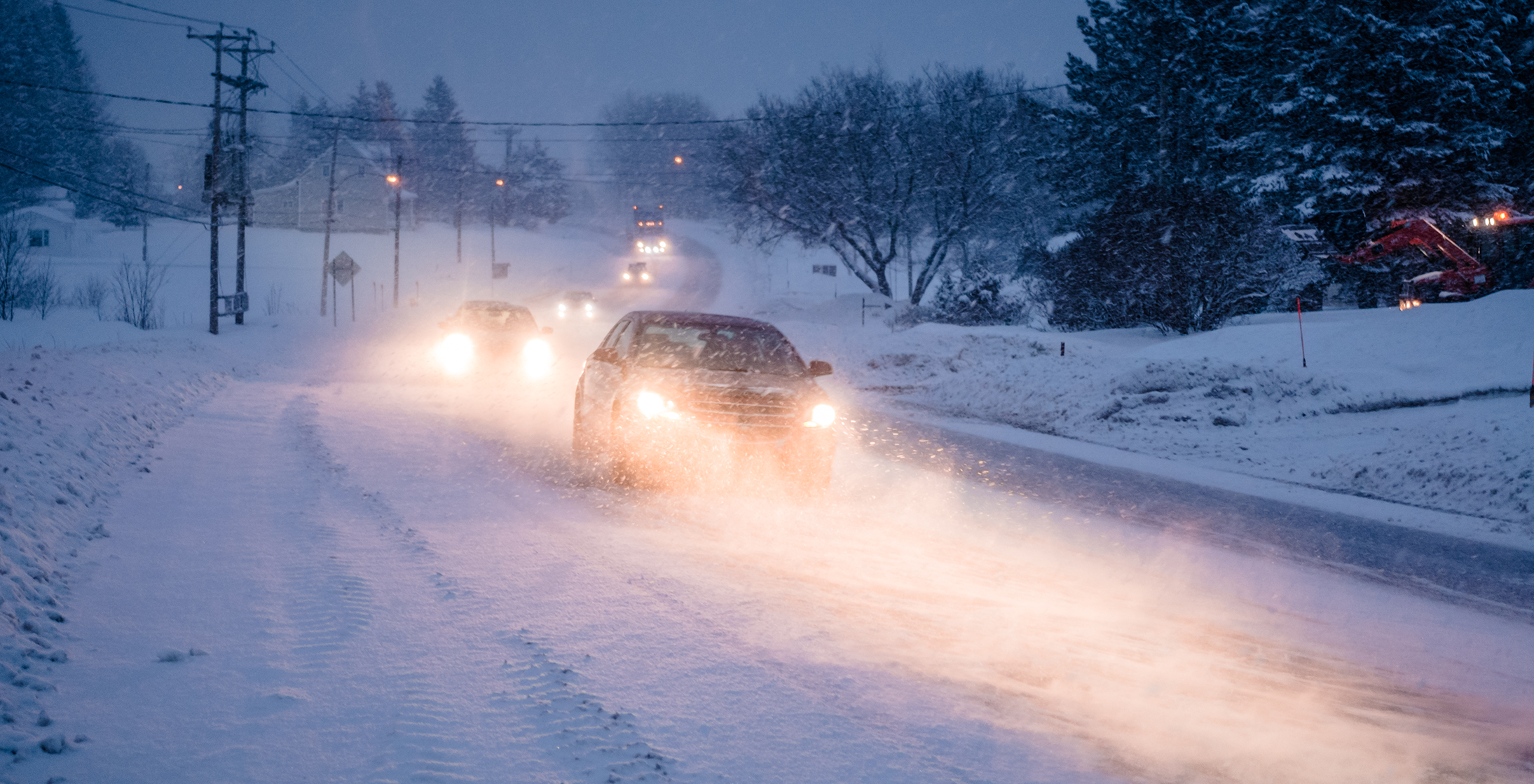
Driving in winter with snowy conditions in Springdale, AR, can still be very challenging, especially when your ABS light comes on during or after a storm. Many drivers immediately think about the worst-case scenario, namely, brake failure, and whether it is safe to continue driving.
We often assist our customers in interpreting brake warnings in the wintertime, and one of the most common cases is when the ABS light goes on due to snow, ice, and slush on the roads. The good news is that in many instances, an ABS light warning after a snowfall is not usually a sign of an emergency. The point here is to know when it is safe to keep an eye on the situation and when it is time to book your car for a check-up.
What Is My Car’s ABS?
Your Anti-lock Braking System, which is also known by its abbreviation ABS, is there to prevent your wheels from locking up during the process of hard braking at all. Instead of performing the act of skidding on that slippery surface with the tires, ABS is the one quickly pulsing the brake pressure, thus keeping steering control intact for you. In fact, this technology is a must-have during the winter months in Springdale when snow and ice make the roads slippery. The ABS system works on four wheel speed sensors that are mounted on each wheel.
The sensors in this system are always keeping track of the rotation speed of each tire. If it happens that one tire is slow in comparison to the others, then the system will intervene to avoid the skid. If everything is going and working perfectly, the entire process takes place unnoticed in the background. On the other hand, when the sensors are having a hard time with data correctness, the system disables itself and lights up the ABS warning light to notify the driver.
What Causes the ABS Lights to Come on During Snowstorms?
There are a couple of factors behind it. The first and foremost is the snow, ice, and buildup of road grime. The winter road conditions in Springdale are quite bad, mixing snow, ice, sand, and various de-icing chemicals. Traction is made better by these treatments, but at the same time, gritty mud gets formed around the wheel hubs and brake parts, which gradually increases. The buildup around the wheel speed sensors is what makes them most susceptible. A sensor’s signal can be temporarily blocked by a lump of frozen snow, slush, or debris. The ABS module lights up the warning, but the brakes are still in fine mechanical condition since it gets inconsistent data or no data at all.
Another factor that is quite common is the change in temperature and the coming in of moisture. A Springdale winter usually goes with the pattern of freezing at night, followed by thawing during the day. This pattern facilitates moisture going into sensor connectors and wiring. When the temperature drops once again, that moisture might freeze, and interrupt the electrical signal just enough to produce a fault code. One of the most common reasons for the ABS light complaints we receive is this issue, and it is also the one that gets resolved automatically in a few days of dry and warm weather.
Road salt and corrosion can be implicated as well. While Arkansas does not use salt as extensively as some other states, the use of de-icing agents still hastens corrosion. Gradually, corrosion can result in the breaking of the sensor connections or cause the formation of rust on the tone ring that the sensors detect. Winter conditions often expose these borderline components, making the ABS light appear shortly after a storm.
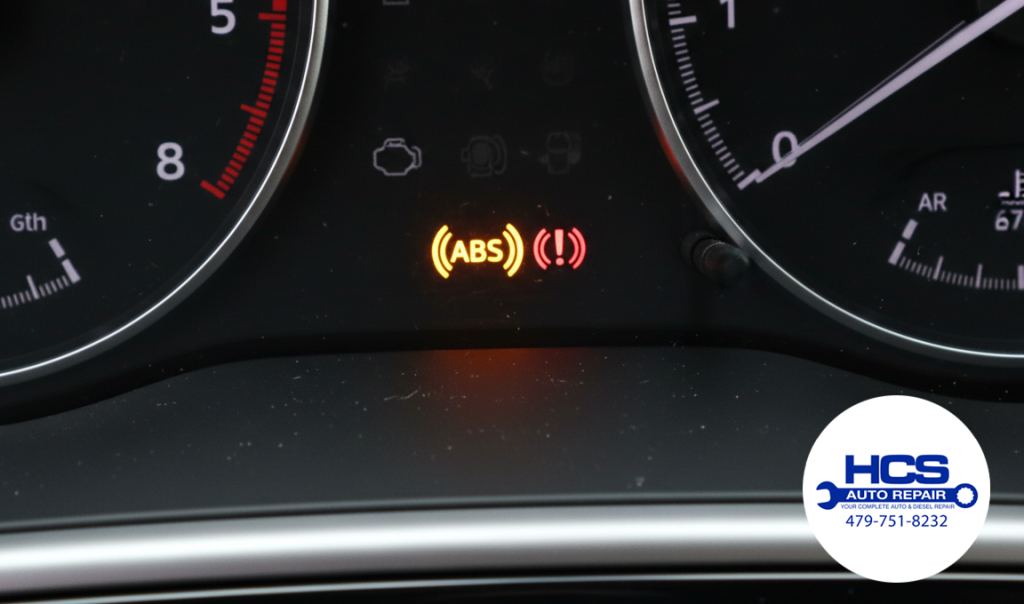
Have My Brakes Failed When I See The ABS Light?
One of the most important points for drivers to understand is that an ABS warning does not mean you have lost all braking ability. Your standard braking system still works. ABS simply becomes inactive until the issue is resolved. For the typical winter scenarios in Springdale, it is justified to keep an eye on the light for a little time if the ABS light was on straight after passing through deep snow or slush, the vehicle works and stops just like before, the light goes out after the car dries up or warms up, and there are no other warning lights on.
The cause in these instances is commonly a temporary blockage of the sensor rather than a malfunctioning part. Sometimes, if the problem is temporary, cleaning the wheel wells and driving for a little while can help to get the sensor signals back.
That being said, there are situations when it is better not to overlook the ABS light. When the light remains on for more than a couple of days, comes back repeatedly, or has other warning lights along with it, then it is time to call for an inspection. Acknowledging a problem at an early stage often prevents more costly repairs since the dealer has already dealt with the corrosion or wiring problems before they spread. We use education as a tool every time. Our aim is to make Springdale drivers aware of what their cars are saying so that they can make assured and well-informed decisions.
What Do I Do Next?
In case your ABS light comes on after a snowstorm, what is to be done? First, you should keep your cool. The standard braking system is still in operation. Nevertheless, ABS will not take over during emergency stops, and that is a situation that can be particularly critical on icy roads. Next, inspect the area for any clear signs of trouble, such as packed snow or ice around the wheel sensors.
If possible, remove the ice and snow and wait for a short time to see if the light goes out after driving. If not, then it is wise to have the vehicle checked. Our skilled professionals can determine the problem quickly and recommend an affordable repair. Do not forget that ignoring a constant alert can make driving on ice even more dangerous, since it is the very same condition where ABS comes in as a lifesaver.
We have seen winter ABS warnings every year, and most are not emergencies. However, ignoring a persistent warning can lead to reduced safety on icy roads where ABS is crucial. Based on our experience, we would recommend an examination if the light is still on for more than a few days or if it comes back on and off. Early detection will often prevent more costly work.
Choose HCS Auto Repair
Your car is not just another customer to us; you are our friends and a lifetime customer. The ASE-certified technicians are always at your disposal to assist with any auto repair in Springdale, AR, whether it is an oil change or a transmission repair. Since we opened in Springdale in 1988 and then relocated to our current facility in 2013, we have been able to serve customers even better. It is our aim to exceed customer expectations, together with our qualified employees, which gives us a competitive edge. We provide a variety of services to meet different customer requirements in both interior and exterior detailing.
A Springdale snowstorm and a light in your ABS system are not necessarily causes for concern, but they are not something that can be ignored. A basic understanding of how winter affects sensors goes a long way in keeping a driver safe and proactive. The next time it happens to you, take a moment and check it out yourself. At HCS Auto Repair in Springfield, AR, we want to make sure that no matter what the weather is like, your vehicle is safe and reliable. Call us today at (479) 751-8232.