
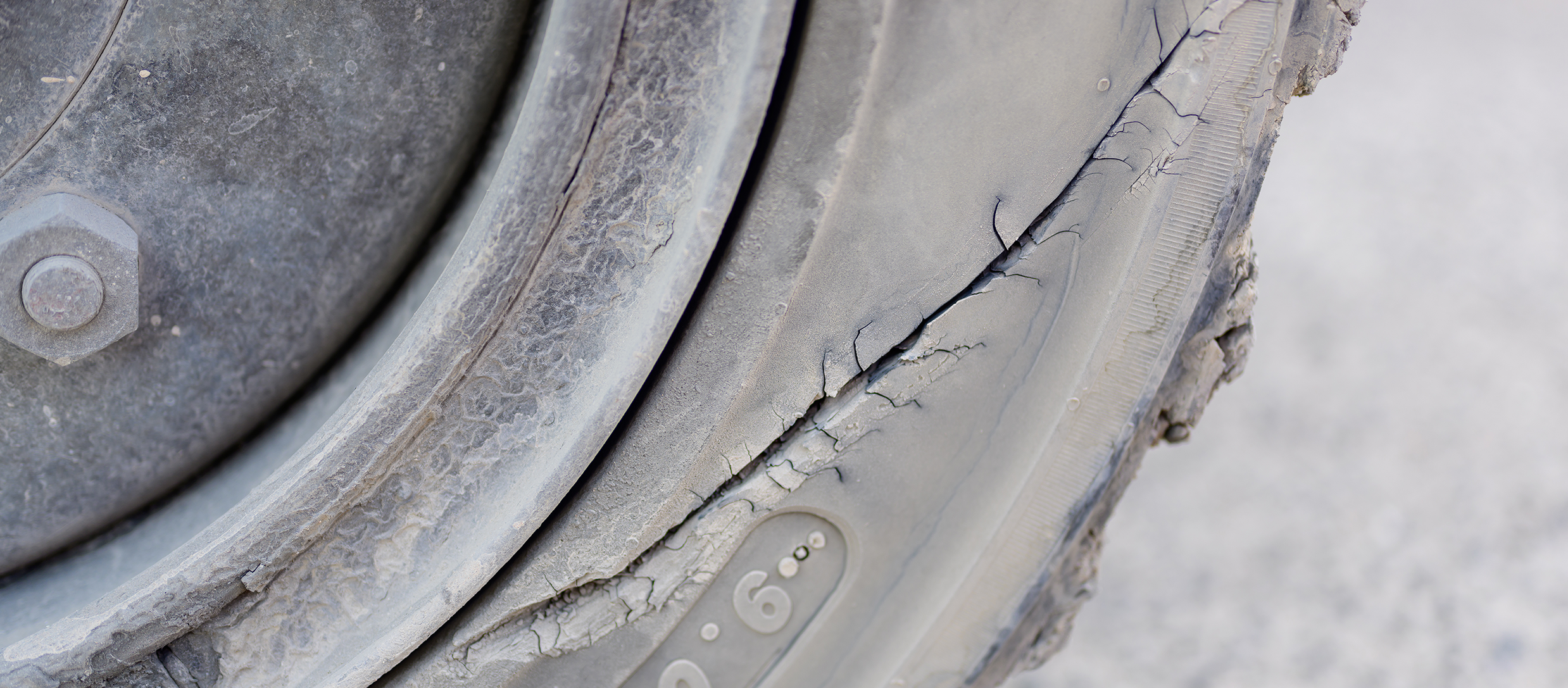
Your tires are your only point of contact with your car and the road, and the state of your tires is entirely crucial to the safety of other drivers and to your own safety. If there are rubber cracks on tires, then your tires are deteriorating and slowly losing their protective elements.
Tire aging is a natural process where rubber chemicals are broken down by exposure to the environment. Your tires are constantly being attacked by the sun, heat, brake dust, and other road chemicals. While tire manufacturers do add anti-aging chemicals to tire rubber, after some time, these chemicals fade away.
The development of cracks indicates loss of tire elasticity, with consequent implications for your vehicle’s safety and performance. With decreased rubber flexibility, your tires become less capable:
- Of having effective traction on road surfaces
- Of being able to handle road shocks effectively
- Of resisting blowouts and punctures
- Of offering consistent braking
Knowing why these cracks form and how to avoid them can make you experience safer rides while maximizing your tire investment.
Understanding Rubber Cracks on Tires
If you look at your tires very closely, you may see small lines or cracks on the surface. These rubber cracks take many different forms, with distinct characteristics and causes.
Types of Tire Cracking
Weather checking: This is the most frequently occurring form of tire cracking and is seen as small lines on the surface that result from rubber compounds reacting to exposure.
Weather cracking: This is more penetrative than surface checking, developing deeper, broader cracks that cut deeper into the rubber material.
Ozone cracking: Atmospheric ozone degrades molecular bonds in tire rubber to form characteristic degradation patterns.
Common Locations for Tire Cracks
Tire sidewall cracks: These will be the initial cracks to show up, in the shape of fine horizontal or inclining marks on the exterior surface of the outer tire wall. The sidewall is more susceptible to environmental breakdown and flexural stress since it has a thinner construction.
Tread groove cracks: These form at the tire tread grooves’ bottom where water, dirt, and chemicals tend to congregate. They will initially begin as minute cracks but slowly penetrate deeper into the tire with time.
Signs of Rubber Breakdown
All these different kinds of cracks are signs that your rubber compound in your tire is weakening its molecular structure. Chains of the rubber start to break down, thereby weakening the material’s strength and flexibility. The deeper and wider cracks become, the more they weaken the structural center of the tire and are the channels through which air escapes and failure can occur.
Causes of Tire Cracking and Aging
Your tires are constantly fighting all types of environmental stresses that slowly deteriorate their rubber compounds. An understanding of these forces of deterioration makes you realize why even the best tires eventually succumb to cracking and aging.
1. Sun exposure
Sunlight is the largest tire life enemy. Ultraviolet light passes through the rubber’s surface, degrading and destabilizing chemical bonds with the passage of time. Photodegradation occurs at a higher rate when vehicles are kept out in sunlight for extended periods. A very inhospitable environment for tire rubber is formed by combining atmospheric ozone and UV light.
2. Temperature fluctuations
Seasonal temperature change further stresses the tire compounds. In the winter season, with the lowering of temperature, the rubber becomes hardened and brittle. When the spring season sets in and the temperature increases, the rubber is expanding and contracting constantly. The constant expansion and contraction degrade the molecular structure of the rubber and make it prone to cracks.
3. Brake dust and road chemicals
Brake dust and road chemicals are two surface-losing agents that no drivers even consider. Brake dust is metal particulates and chemical particulates that can penetrate the surfaces of tires, and road salt, cleaning chemicals, and spilled gasoline bring corrosive conditions into play. These contaminants don’t stay on the surface, instead, they migrate deep into the rubber compound, accelerating the breakdown process from the inside out.
The combined impact of these factors is the reason tires have to be replaced after five to seven years, irrespective of tread depth.
Evidence to Identify Tire Cracking and Aging
Evidence of tire cracking and aging can be determined through periodic visual checks that you can conduct easily at home. Begin by checking your tires under good light, ideally during daylight when the finest details are most conspicuous.
Focus your attention on these critical areas:
Sidewalls – Look for small hairline cracks that typically appear first along the tire’s side surface
Tread grooves – Check the base where the tread meets the sidewall for developing fissures
Shoulder area – Inspect where the sidewall curves into the tread pattern
The cracks usually start as small surface lines that may look harmless but are actually signs of rubber degradation. Keep an eye particularly for cracks that seem to be getting deeper or longer over time. New cracks usually tend to be lighter in color than the surrounding rubber, so it is very easy to notice them while checking.
Slide your hand slowly along broken sections – you’ll be able to detect more serious fissures that are more critical. Record findings with photographs to monitor progress from one inspection to the next so you can determine when a professional inspection is needed.
Potential Hazards Related to Cracked Tires
What begins as surface cracks can easily progress rapidly to destructive tire wear, jeopardizing your safety on the highway. Hairline cracks are stress concentration points where the rubber is also getting more vulnerable to additional degradation. The longer they extend, the more channels for water, soil, and waste to penetrate deeper into the tire structure.
The degeneration from cosmetic cracking to structural component failure is quicker than drivers appreciate. Cyclic temperature changes make the rubber expand and shrink back and forth repeatedly, relentlessly growing existing cracks and making them progressively longer and deeper with each cycle. Continuing to do this with each cycle weakens the tire increasingly to maintain sufficient air pressure and resist cornering stresses, braking stresses, and acceleration stresses.
When cracks reach into the tire’s internal structure, they will cause:
- Sudden blowouts at highway speeds
- Tread separation is causing the vehicle to lose control
- Loss of air pressure results in poor handling and fuel wastage
- Sudden tire failure without warning
Prevention of Premature Cracking and Aging of Tires
Initiating the prevention of cracking can work wonders to prolong the life of your tires and have them continue operating safely. The most important thing is to minimize exposure to environmental conditions that cause rubber degradation.
Shelter from the Elements
- Park the vehicle in a garage whenever possible to protect tires from direct sun and UV light
- Utilize covered parking facilities or car covers when storage in a garage is not a choice
- Never allow the vehicle to be parked out in direct sun for long periods
Maintenance Routine Practices
- Brush snow, dirt, and road salt from tires after being in harsh conditions
- Keep tires at the correct inflation levels to minimize unnecessary stress on rubber materials
- Keep tires clear of standing water, which is quicker to chemically break down
- Run your vehicle regularly – regular short runs prevent flat spots and keep the rubber flexible
Chemical Protection
- Wash off brake dust and road chemicals from tire surfaces with routine washings
- Keep away from sources of ozone, like electric motors or welding equipment
- Use tire protectant products that are meant to defend rubber against UV damage
- These preventive practices form a defense shield against the key causes of premature aging of tires.
Maintenance Habits for Prolonging Tire Life
Professional inspections at periodic intervals are paramount to efficient means of tire health and longevity. At HCS Auto Repair, our ASE-certified experts suggest developing a routine schedule of thorough tire inspections every 6,000 miles or at every season change.
Professional tire repair specialists can detect early warning signs that untrained eyes might miss:
- Irregular wear patterns indicate alignment issues
- Subtle sidewall deterioration before visible cracking appears
- Tread depth measurements using precision gauges
- Internal structural damage from road hazards
Your car repair technicians also perform regular maintenance work in inspections, including proper inflation adjustment, rotation service, and wheel balancing. These car repair services work hand-in-hand to provide even stress on the tire surfaces, preventing premature aging in specific areas.
Scheduled appointments ensure possible problems are resolved immediately before they compromise your safety or require costly replacements.
When to Call for Professional Help with Tire Malfunctions
Professional service for tire inspection and repair is a necessity as soon as you experience any cracking or aging of your tires. While regular care prevents problems, there are some circumstances requiring immediate specialist attention from seasoned professionals.
You are to call ASE-certified mechanics at HCS Auto Repair when you experience:
- Visible cracks in sidewalls or grooves of the tread, regardless of their size
- Multiple tiny cracks are scattered on various points of the tire
- Worn-out or broken tread lugs
- Deep cuts or grooves that extend to the layers below
- Bulges or wrinkles in the tire structure
- Unusual wear patterns indicating alignment or pressure problems
ASE-certified technicians have the training to determine minute surface weathering from severe structural failure. They have highly trained personnel and equipment to ascertain if cracks compromise the integrity of your tire or are an expression of the natural aging process that can be noted.
Professional inspection is especially important for new tires that are in the process of premature cracking, which can be an indication of factory defects that are warrantable. Trying to determine tire safety yourself will lead to life-threatening miscalculations in changing your tires for road safety.
Choose HCS Auto Repair
It really can’t be all that hard to maintain your tires. If you use the preventive maintenance guidelines we’ve outlined and stay ahead of regular checks, it’s easy to maintain your tire life and get a comfortable ride down the road. Remember, an understanding of why rubber cracks on tires and how to prevent it provides the power to make informed choices when it comes to maintaining your car.
Whether you require cracked tire repair or simply want an experienced opinion of the condition of your tires, our ASE-certified technicians are available.
Don’t wait until minute cracks have developed into life-threatening issues. Call (479) 751-8232 today or make an appointment online to keep your tires in optimal operating condition for safe driving.