
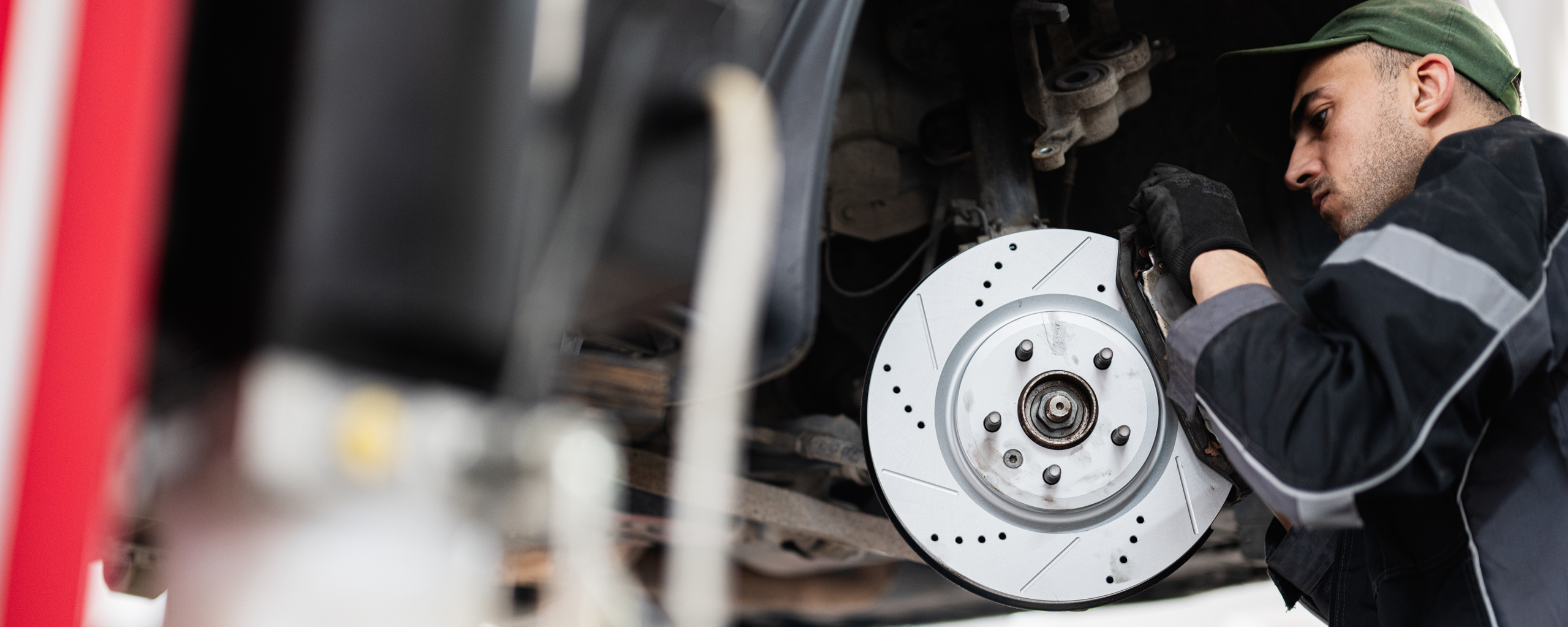
Have you ever encountered a situation in which you pressed the brake and felt it being very stiff, but your car did not come to a stop? This hard pedal and weak brakes discomfort is not only annoying; it is a safety issue that should be treated without delay.
In case your brake pedal is hard and braking power is also bad at the same time, then it is certain that your vehicle has some brake system problems. These two issues are interrelated to a certain degree. The braking system requires an ideal harmony of mechanical and vacuum-assisted parts that are in perfect unison to give you the responsive and reliable stopping power every time you drive.
The brake systems of modern cars and trucks are very complex and utilize a mixture of hydraulic and vacuum assistance to provide smooth and effective braking action. Whenever there is a problem with this system, especially the vacuum part, you will feel the hard pedal and experience reduced braking efficiency at the same time. It is very important to understand what is happening under your vehicle’s hood so that you know when it is time to call for a professional.
Since 1988, HCS Auto Repair has been a pioneer in diagnosing and repairing brake system problems. Our ASE-certified specialists are aware that fast intervention in brake-related issues is not only a car repair concern but also a matter of road safety for you and your family. Now, let us take a closer look at the main reasons for the appearance of these symptoms and the manner in which reliable auto repair services can bring back the braking power of your car.
Discovering the Brake System Parts
The brake system of your automobile depends on a lot of components that are interconnected and working together to provide you with the smooth and responsive stopping power that you have been taking for granted every day. So, let’s start to unpack that.
Brake Pedal and Brake Booster Connection
One of the main components that make up the brake pedal system is the brake booster, which is located just behind your brake pedal and is very important for making your braking experience just like a breeze. If there were no brake booster, then you would have to apply a lot of force to even just slow down your vehicle. The brake booster uses the vacuum pressure to augment the force you are putting on the pedal, so a light press and gentle push is converted to a braking force that is strong and powerful.
Braking Powered by the Vacuum Pump
Your brake booster is powered by the vacuum pump, which generates the necessary negative pressure. The contemporary cars have two varieties in most cases:
Mechanical vacuum pumps: These are connected to the camshaft and usually placed on the right side of the cylinder head. The pumps are reliant on the engine and produce the vacuum as the engine runs.
Electric vacuum pumps: These are fueled by the vehicle’s 12-volt electrical system, thus allowing more flexibility in terms of positioning and function.
The Brake Vacuum Line System
The brake vacuum line is responsible for connecting your vacuum source to the brake booster and, in doing so, creates a sealed pathway for the arrival of vacuum pressure. The vacuum is either drawn directly from the intake manifold (where the engine itself normally creates vacuum) or it is from a dedicated vacuum pump that this hose links to your brake booster. This system consists of check valves that allow the air to flow only in one direction, thereby providing steady vacuum pressure and preventing backflow that would diminish your braking performance.
Among the most common reasons for a hard brake pedal and weak brakes are
If you are complaining about hard brakes and a stiff pedal, there is a high chance that you might be one of the few fortunate ones having the vacuum system failure of the very common type. From the actual service diagnosis, the vacuum line and related components failures account for about 90% of these cases.
The most common things responsible for this issue are:
Vacuum hose in cracked state, Rubber hoses that connect your brake booster to the vacuum source are subject to deterioration and natural wear and tear, so that over time they may develop cracks. Some of the cracks can be detected, while others are sometimes not easily seen, especially if they are located on the inner side. However, even the smallest crack is enough to allow the air to leak in, thereby eliminating the vacuum pressure that is so crucial for the assistance of the brakes to work properly.
Malfunctioning check valves – These one-way valves prevent air from flowing backward through the system. When they stick closed, the vacuum can’t reach your brake booster at all, leaving you with weak brakes and a pedal that feels like pushing against a brick wall.
Age-related hose wear – Vehicles as young as four years old with 70,000 miles can develop multiple stress cracks in their vacuum lines, especially at connection points where the hose flexes during normal operation.
Diagnosing Brake System Issues
When you are faced with weak brakes together with a hard pedal, the brake inspection methodical approach is of great importance. The first step is to follow the vacuum lines from the brake booster to the source, which can be either the intake manifold or a special vacuum pump. You are going to scrutinize these pipes from one end to the other and pay particular attention to the points where the pipes are connected, as this is where stress and heat can speed up the process of deterioration.
Putting the brakes in the first place, visual inspection is crucial in the diagnosis of brake system problems. Inspect the rubber hoses for any visible damage like cracks, splits, and wear. Don’t check only the surfaces that can be seen, turn the hoses and examine the bottom part as well, since damage is often found there. Ensure the check valves allowing the air to flow in one direction only are functioning correctly; they must be able to move without restrictions and close tightly. Occasionally, tiny fissures develop on the inner side of the plastic hoses, and they are hard to spot; therefore, it is necessary to feel along the whole length of each hose for soft spots or bumps.
This is the point where automotive repair expert knowledge can be considered a great asset. The issues that can be identified with a careful visual inspection are indeed many, but the internal damage to the hoses and vacuum pumps failing requires the use of specialized diagnostic tools. The technicians are able to use vacuum pressure tests to determine how well the system is working and to find leaks that are not visible even to the most experienced eyes. They are also able to determine if your mechanical or electronic vacuum pump is producing enough vacuum to support your braking system effectively.
The Role of Vacuum Pumps in Brake Performance
The vacuum pump of your car is very important because it produces the vacuum pressure that makes the brake booster operate. The type used in modern cars is either mechanical or electric.
1. Mechanical Pumps
Mechanical pumps are located on the cylinder head’s right side and are directly attached to the engine’s camshaft. The engine, in its turn, powers these pumps, thus causing the creation of a vacuum with each engine cycle. A direct mechanical linkage connects the pump and camshaft.
2. Electric Pumps
Electric pumps use power from a 12-volt source and do not rely on the engine. It’s quite common to see both types used in the same engine model, but it truly all comes down to your particular vehicle setup.
Each pump type has distinct failure patterns that can lead to a hard brake pedal:
- Mechanical pumps can wear out at the camshaft connection point, lose their internal sealing, or develop cracks in their housing
- Electric pumps may fail due to electrical issues, motor burnout, or relay problems
When a pump of any type fails, the resulting lack of vacuum assistance will make your brake pedal feel hard and less powerful; thus, the hard pedal and the lesser braking power become the result.
Preventive Maintenance Tips for Reliable Braking
Limited brake system problems take a wait-and-see attitude towards car repair and maintenance. You should check vacuum hoses every 30,000 miles or during the cycle of routine service appointments. Look for signs of age, such as surface cracks, loss of flexibility, or discoloration, these are indications that the hose will soon be operating inefficiently. Key maintenance recommendations include:
Visual inspections of all vacuum lines and connections every oil change
Replacement of rubber hoses every 4-5 years, regardless of mileage, since rubber degrades over time
Check valve testing to ensure proper one-way airflow
Brake booster function checks during annual inspections
Maintenance of the brake pedal usually takes place over the entire life of the car; a troublesome or dangerous situation can be easily avoided in this way. You will always have sufficient braking power if you notice a developing crack in a vacuum hose and attend to it before it completely fails. A $20 hose replacement is nothing compared to the risk of losing braking capability or incurring accident damage. Preventive maintenance not only keeps your brake system in good condition but also ensures that you have the requisite control over your vehicle and can enjoy a calm driving experience every time you step on the pedal.
Why Choose HCS Auto Repair for Brake System Service?
If you are experiencing a scenario with weak brakes and a hard pedal, then the auto repair shop in Springdale, AR, is the place to go. HCS Auto Repair has been providing services for the Springdale community since 1988, and during these years, they have gained an excellent reputation for their honest, reliable service, spanning over three decades. Since our relocation to our current place in 2013, we have increased our capacities in order to serve you and your family’s automotive needs better.
Every diagnosis and repair of the brake system performed by our team of ASE-certified technicians is backed by specialized knowledge. No matter whether your problem is hard pedal and weak braking (as in this article), or brake system maintenance needed, we are well-equipped with the expertise and the diagnostic tools to locate the main cause. We inspect vacuum hoses for the hard-to-spot cracks and do testing of check valves and vacuum pumps; in fact, we deal with all brake concerns with comprehensive attention to detail.
The HCS Auto Repair culture is what separates us, that is, building lifetime customer relationships through tireless dedication. We do not regard you as a mere vehicle moving through the bay doors, we consider you to be a friend and a lifelong customer. This philosophy encourages us to carry out open diagnostics, make sincere recommendations, and perform high-quality repairs that protect you while driving on the road.
If your vehicle has a problem, our wide range of services, from simple oil change to full transmission rebuilding, will always give you the option of having a reliable partner by your side for the help you need. You definitely should have technicians for brake safety who are as concerned about your health as they are about your car.
Choose HCS Auto Repair
The combination of weak brakes and a hard pedal is not a good indicator to be ignored or postponed. This shortcoming in your brake’s performance indicates that not only the vacuum system but the whole brake system needs to be repaired without delay. The weak car that brakes is a danger not only to the driver but also to the passengers and other motorists on the road. Knowing the connection between weak brakes and a hard pedal will help you identify the signs early.
Issues such as old vacuum hoses, defective check valves, or broken vacuum pumps will all need to be diagnosed by a technician and repaired to completely restore the braking operation of your car to the safe limit.
Never delay your brake issue treatment until the condition becomes serious. Whether it’s weak brakes or hard brakes or anything that changes your brake pedal feel, consult us! Our ASE-certified technicians at HCS Auto possess the right expertise, experience, and diagnostic equipment to pinpoint and rectify your brake system problems swiftly and accurately.
Call us today at (479) 751-8232 to schedule your brake system inspection. Your safety is our priority, and we’re here to help keep you and your vehicle safe on Springdale roads.