
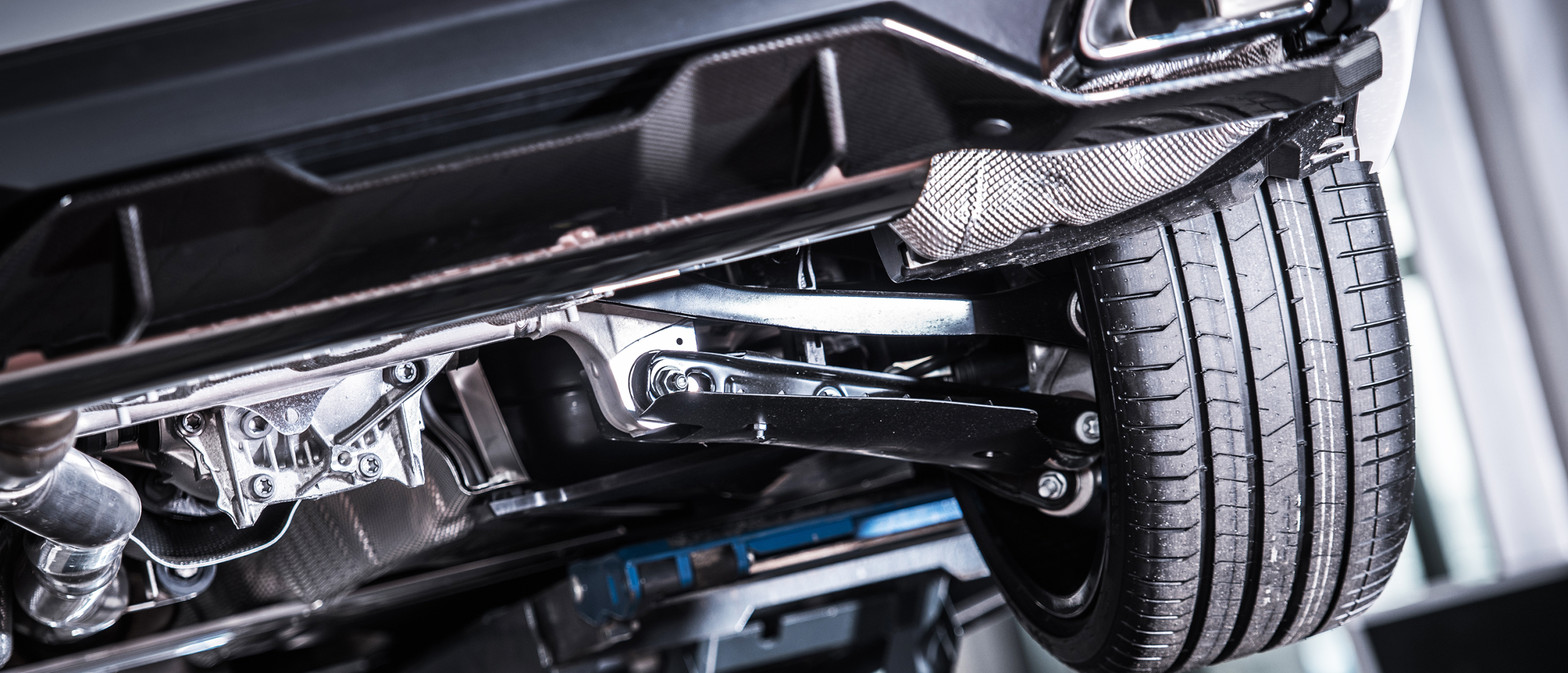
Is your car exhibiting signs of one-way tire wear or steering drift? These are usually indicators of more serious suspension issues that must be fixed right away.
Inboard or outboard patterns of tire wear will empty your wallet with replacement after replacement. Worse still? Replacing worn tires without fixing the cause behind them results in a cycle of pointless spending.
The suspension on your car is a vital system that provides proper tire-to-road contact, stiff steering responsiveness, and smooth ride comfort. It also protects vital components of your vehicle from the abuse and shock of harsh roadways and, in the end, safety and long-lasting durability.
When you experience suspension issues, they take away the safety and functionality of your vehicle. Make sure you inspect your steering and suspension components thoroughly so that you can identify and address these problems.
Here, we take you through step-by-step suspension problem diagnosis. You’ll find out how to identify warning signs, check the most critical components, and what you need to do to bring your car back to its optimal performance.
Signs of Suspension Issues
Your vehicle’s suspension system sends clear warning signals when something’s not right. One of the most telling signs is irregular tire wear. You might notice wear on the inside edge of your tires, uneven wear patterns across the tire surface, and premature tire wear requiring frequent replacements.
A wandering steering wheel is another red flag. When you’re driving straight, your vehicle shouldn’t pull to either side or require constant steering corrections to maintain a straight path.
These symptoms point to specific problems in your suspension system:
Tire wear on the inside/outside: Indicates misaligned wheels or worn ball joints
Steering wandering: Often caused by loose tie rod ends or worn steering components
Uneven tire wear: Can result from damaged control arms or bushings
A proper front end check is essential to pinpoint these issues. During this inspection, we examine:
- Tie rod ends (inner and outer)
- Ball joints
- Wheel bearings
- Power steering components
- Control arms and bushings
Catching these problems early prevents more expensive repairs down the road. A plain tire replacement won’t address the cause of suspension problems – putting a band-aid on a broken bone. Your tires are a valuable investment, and it protects your investment by understanding what is responsible for any abnormal tire wear patterns.
Diagnosing Suspension Problems: A Step-by-Step Guide
A proper suspension diagnosis starts with how you lift and hold your vehicle securely. This first vital step gives you simple access to inspect all of your suspension components up close.
1. Check Tie Rod Ends
Your tie rod ends are critical components of your steering system – they link your steering rack to your steering knuckles so you can turn your wheels. After these parts wear out, they can cause wandering steering and worn-out tires.
How to Check Tie Rod Ends
Grip Test
- Hold the tire at the 3 and 9 o’clock positions
- Shake the tire side to side
- Any movement indicates potential tie rod end issues
Visual Inspection
- Check both inner and outer tie rod ends
- Look for movement at the ball and socket areas
- Remove protective boot to inspect the inner tie rod end
Red Flags to Watch For
- Side-to-side movement while driving
- Noise during road travel
- Visible play in the tie rod connections
Important Note About Replacement
When replacing tie rod ends, you should:
- Replace both inner and outer tie rod ends together
- Never replace just one side
- Order a complete kit for proper compatibility
The reason for replacing both components is practical – you’ll need to remove the outer tie rod end to access the inner one. This approach ensures balanced performance and prevents future issues.
Professional Tip: During your inspection, pay attention to the protective boots. Dulled boots can allow dirt and grime to gain access to the joint, increasing wear. Once you notice split or cracked boots, schedule replacement of these parts in the near future.
The proper inspection of your tie rods lays the foundation for your suspension diagnosis. This procedure identifies steering-related problems prior to them contributing to more severe issues with the handling of your car and the wear on tires.
2. Wheel Bearing and Ball Joint Inspection
Wheel bearings and ball joints are critical components that need to be inspected frequently to prevent steering and suspension issues. Here’s how you can check these parts:
When testing wheel bearings, it is necessary to jack up and hold your car in safety. Grasp the tire at the 6 and 12 o’clock points and attempt to rock the wheel back and forth. Spin the wheel and pay attention to the howling or grinding sounds. A well-functioning bearing should rotate quietly and smoothly. Also, watch for ABS warning lights, as these can indicate bearing problems.
For ball joint inspection, look for the ball joints at the control arm connection points. Check for movement by pulling the brake assembly in and out. Any pivoting motion indicates a worn ball joint. Some vehicles have upper and lower ball joints, while others have only lower ball joints.
When inspecting control arms, follow the control arm to the mounting points. Check for rubber bushings at both ends and check these bushings for cracks, rot, or physical damage. If the bushings are deteriorated, replace the entire control arm assembly.
Pro tip: Inspect surrounding components when replacing ball joints. Ball joints that are worn can indicate stress on related components.
3. Power Steering Rack and Control Arms inspection
Your power steering rack is an essential part of your steering system. While checking this product, take away the protective boot to see directly the rack seals. Check for any hydraulic fluid leaks – this shows worn-out seals that may cause steering problems and even system malfunction.
Power Steering Rack Inspection Steps
- Remove the protective boot
- Check for fluid leaks around the seals
- Look for any visible damage or corrosion
- Test for smooth movement without binding
The control arms link your vehicle’s frame to the steering knuckles and are therefore crucial to accurate wheel alignment. During the inspection, observe closely the rubber bushings at the mounting points.
Control Arm Inspection Checklist
Trace the control arm to the mounting points. Inspect the rubber bushings for cracking, rotting, and mechanical wear. Inspect for excessive movement or play.
You may substitute individual damaged bushings or choose to get an entire control arm assembly with pre-mounted bushings and ball joints. That option is usually based on the age of your car and the degree of wear on the other parts.
Other Suspension Parts to Check
The suspension system in your car contains several important components other than control arms and tie rods. Inspect the following:
Tire Pressure
- Incorrect pressure leads to specific wear patterns
- Over-inflation causes center wear
- Under-inflation results in edge wear
Shocks and Struts
- These components control your vehicle’s bounce and stability
- Look for signs of fluid leaks
- Check for physical damage
- Test bounce recovery
Sway Bar Links
- These parts help maintain stability during turns
- Inspect for loose connections
- Check for worn bushings
- Listen for rattling noises
A proper alignment check completes your suspension inspection. This step ensures all adjustments meet manufacturer specifications and helps prevent uneven tire wear or wandering steering issues.
Repairing Suspension Issues: Installation and Testing
After identifying the worn components through your inspection, you’ll need quality replacement parts from One Auto to restore your vehicle’s handling. Here’s what the repair process looks like:
Installation Steps
- Remove the worn components carefully, keeping track of all hardware
- Clean mounting surfaces thoroughly
- Install new parts following vehicle-specific torque specifications
- Replace both sides when working with tie rods, even if only one shows wear
- Install control arms with new bushings and ball joints pre-assembled
Testing the Repair:
- Lower the vehicle back to the ground
- Check steering wheel alignment
- Perform a basic road test before alignment
- Listen for any unusual noises
- Feel for improved steering response
A professional alignment is essential after installing new suspension components to ensure proper tire wear and optimal handling. This step calibrates your new parts to work together as a complete system.
Choose HCS Auto Repair
Don’t let tire wear and wandering steering issues put your safety at risk. These caution lights beg for your immediate attention – your car or truck’s way of telling you something is amiss with the suspension system.
Our skilled personnel at HCS Auto Repair stand by to assist you in keeping your vehicle in top performing condition. Our specialists are qualified to provide thorough suspension inspection and repair, making your truck or vehicle roadworthy.
We’ll go the extra mile to get your car back on the road. Whether you’re experiencing worn-out tie rods, malfunctioning ball joints, or other suspension issues, our staff is trained to find the issue and repair it.
Are you ready to have those suspension issues resolved? Call us now at (479) 751-8232 Our experienced technicians will have your car running smoothly like new, and those tire wear and steering issues are a thing of the past.
Remember – frequent suspension checks can save you from shelling out an arm and a leg on repairs and keep you safe on the road. Trust us at HCS Auto Repair for all your vehicle maintenance needs.