
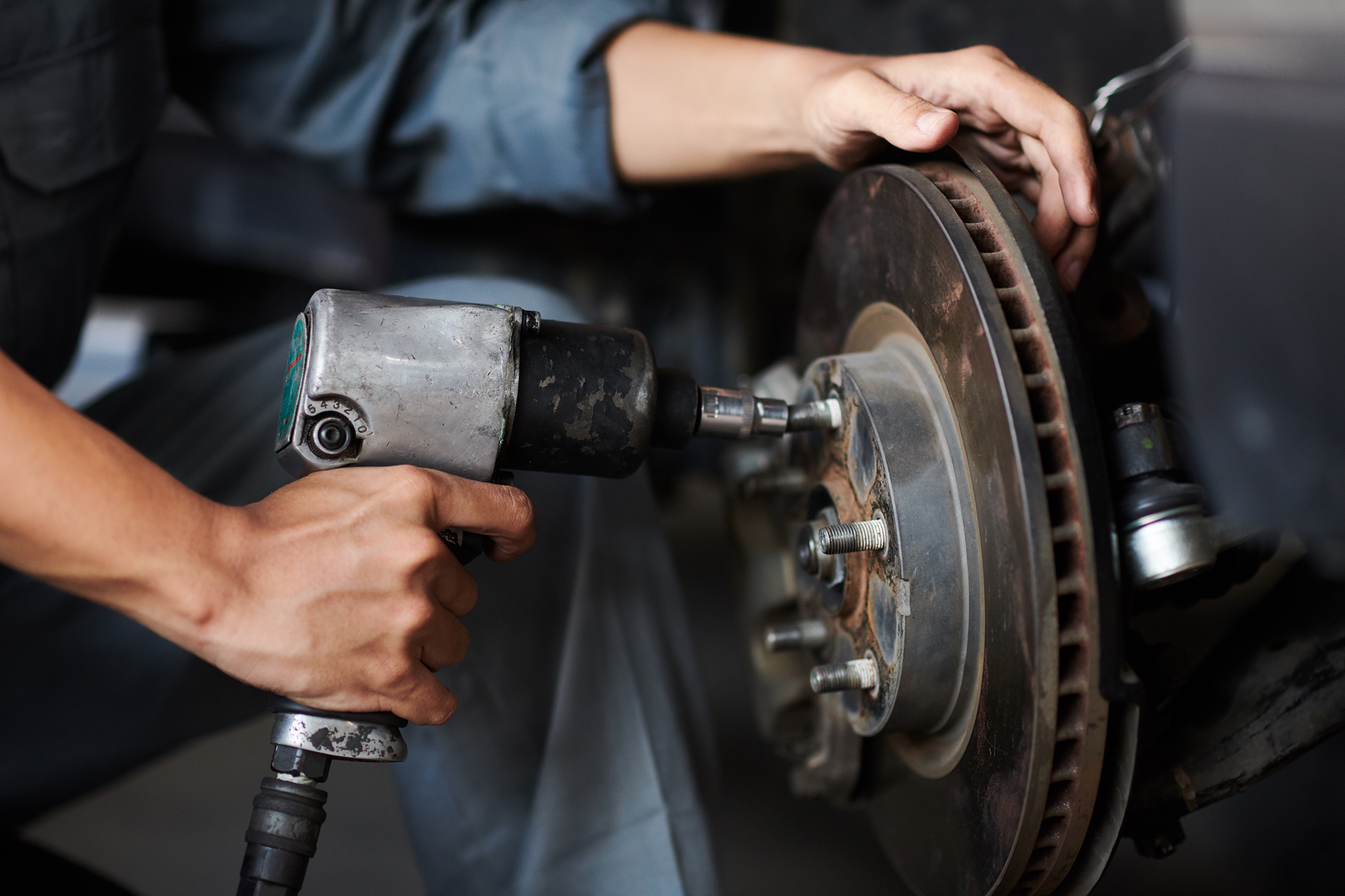
That piercing squeak from your tires is more than an annoyance, it’s a warning sign from your vehicle hinting at the junkyard! Squealing brakes are among the most frequent indicators that your brakes require immediate attention, but most drivers tend to disregard such noises as mere annoyances rather than warning signals.
Your brakes are your car’s first line of protection against crashes and accidents. As they start to squeak, ignoring the problem puts you, your passengers, and other drivers at risk of harm. What starts as a minor squeak can quickly turn into complete brake failure, creating dangerously excessive stopping distances and potentially horrific consequences.
Follow this guide to learn more about:
- The essential components of the brake system and how they collaborate
- The most frequent reasons why brakes squeal and what prompts them to warn you
- Other symptoms of brake failure, aside from squealing sounds
- Why on-time professional service is good for your safety and your wallet
Recognizing these warning signs enables you to take responsibility for maintaining your vehicle in optimal condition and ensuring it runs smoothly.
Learning About Your Car’s Braking System
Your car’s hydraulic braking system utilizes a sophisticated collection of components that work together to bring you to a secure stop. Each serves a vital function in converting pressure from your pedal to the force needed to bring you and your occupants safely to a stop.
Here is how each piece of equipment cooperates:
Brake pads: They are the friction material that creates the braking pressure. They drive against the brake rotors (metal disks mounted on your wheels) to create friction that slows down your car.
Brake calipers: When you press the brake pedal, these apply hydraulic pressure to push the pads onto the rotors with a huge amount of pressure.
Master cylinder: This is the command center of your system, converting the mechanical pressure from your brake pedal into hydraulic pressure.
Brake fluid and brake lines: Pressure travels through these, pushing on each wheel’s caliper assembly regularly.
ABS: It provides another safety aspect by avoiding wheel lockup in the event of emergency braking. It keeps track of wheel speed and controls brake pressure in such a manner that it ensures steering capability and optimal stopping distance.
Every component relies on the others to work correctly. When brake pads wear out, they can potentially affect rotor condition. Dirty brake fluid can ruin the entire hydraulic system. Knowing these interdependencies, you understand why that high-pitched shriek requires prompt attention.
Common Causes of Squealing Brakes
That piercing squeal of your brakes is not only a bother – it’s your vehicle’s built-in alarm system warning you of something that requires maintenance. Knowing why a sound occurs enables you to react appropriately, ensuring your vehicle remains secure and avoids expensive repairs.
Worn Brake Pads with Built-In Warnings
New brake pads usually come with wear indicators, small metal strips built into the pads only to produce that distinctive squeal. When the brake pads wear down to approximately 2-3 millimeters of material, the wear indicators make contact with the rotor face. This produces a squeal to alert you well in advance so you can get the brake pad replacement done before the pads wear all the way through and destroy the rotors.
Glazed Rotors and Brake Pads
Overheating through repeated hard braking or continuous braking will result in glazed brake pads and rotors. In the process, both develop smooth, hardened surfaces with a reduced ability to grip properly. The glazed surface slips over the other instead of establishing effective friction, creating squealing sounds and severely reducing your braking performance. This is usually experienced while driving downhill for miles or repeated braking.
Caliper Squeal Due to Lubrication Problems
Another prevalent cause of squealing in brakes is improper caliper lubrication. The brake hardware in the caliper must be properly lubricated to function properly. When not lubricated, the components will stick or bind, causing the brake pads to drag on the rotors in an irregular motion. This produces both squeals and excessive pad wear, so frequent lubrication maintenance is necessary for trouble-free braking.
Additional Signs Indicating Brake Problems
Where squealing is your initial warning system in your vehicle, the grinding noise of brakes is a critical escalation that must be addressed promptly. This grinding, scraping, and crunching noise indicates that your brake pads are completely worn out through their friction material, resulting in metal-to-metal contact between the backing plate and rotor. Grinding indicates that you’re hearing costly damage happening right before your ears as your rotors become scored and warped.
Spongy brake pedal symptoms are yet another telltale symptom that can’t be ignored. If your spongy brake pedal feels mushy or moves towards the floor when you step on it, you’re experiencing a compromise in the hydraulic system. The hazardous situation usually arises due to:
- Trapped air bubbles in brake lines, decreasing hydraulic pressure
- Leakage of brake fluid at calipers, brake lines, or master cylinder
- Weary master cylinder seals facilitating inner fluid bypass
- Degraded brake fluid that has absorbed water over the years
Your car may also pull to one side when braking, meaning there’s unbalanced pad wear or a jammed caliper. Dash warning lights, either the brake light or ABS light, indicate electronic system faults that must be professionally diagnosed. A smoky chemical odor after braking indicates overheated components, whereas vibrations in the steering wheel or brake pedal indicate warped rotors or imbalanced brake surface contact.
The Call to Timely Brake Service and Repair
Your brake system is not forgiving. When you hear the first squeak or see the first sign, the call for timely brake service becomes a reality that hurts. Putting it off makes little problems, big safety issues and costly headaches.
Skipping squealing brakes lands you in serious peril. Your stopping distances increase exponentially as the brake pads wear, making a normal stop unsafe. What begins with a $150 pad replacement quickly turns into costly rotor resurfacing or full caliper replacement when metal-to-metal contact destroys these essential pieces.
Prevention is cheaper than costly repairs any day. Professional brake inspection should be done:
- Yearly for most drivers
- Every 12,000 miles, no matter the time elapsed
- Immediately when warning signs appear
Maintenance every 12,000 miles helps detect problems early, keeping your brake system in top condition. Fresh brake fluid removes corrosion, well-adjusted calipers provide a balanced pad wear pattern, and regular pad replacement helps spare your rotors from wear.
Your family’s safety is left to reliable brakes. Avoid compromised components when professional service can restore your confidence on the road.
Expert Brake Repair Services at HCS Auto Repair
If you’re looking for professional brake repair services near you, we at HCS Auto Repair are the trusted choice in Springdale for all your auto repair needs. Our team of ASE-certified technicians has been serving the community since 1988, bringing years of experience to every brake repair job.
Since relocating to our current premises in 2013, we’ve increased our ability to better serve you and your vehicle. Our skilled mechanics specialize in accurately diagnosing brake system problems, ensuring you receive proper readings and effective solutions for your car repair.
Our Brake Repair Services Include:
Brake pad replacement – Replacing quality pads that are compatible with your car’s specifications
Rotor resurfacing and replacement – Smoothing out braking surfaces or swapping out rotors that are worn out
Caliper service – Cleaning, lubricating, and rebuilding brake calipers to provide peak performance
Brake fluid flushes – Removing dirty fluid and replacing it with new brake fluid
Comprehensive brake system diagnosis – Employing the latest technology to discover hidden issues
You’re not just another customer to us, you’re a friend and customer. That’s why we’re committed to providing honest, detailed brake repairs that keep you secure while driving on Springdale roads while safeguarding your investment in your vehicle.
Choose HCS Auto Repair
Your brakes are giving you a message, don’t ignore them. Squealing brakes: take them as a cry for help from your car! Warning noises like these, along with other indicators such as grinding or spongy pedals, must be addressed immediately to ensure the vehicle remains roadworthy with you and your crew on board.
When you require a brake inspection in Springdale, AR, rely on our trained professionals at HCS Auto Repair. Our ASE-certified mechanics provide accurate diagnoses and high-quality repairs that you can rely on. Since 1988, our Springdale community has trusted us, and we’re here to help you drive with confidence.
Treat those squeals as a serious safety concern! Call us at HCS Auto Repair today at (479) 751-8232 to schedule your brake inspection or consultation. Your safety is worth the call.