
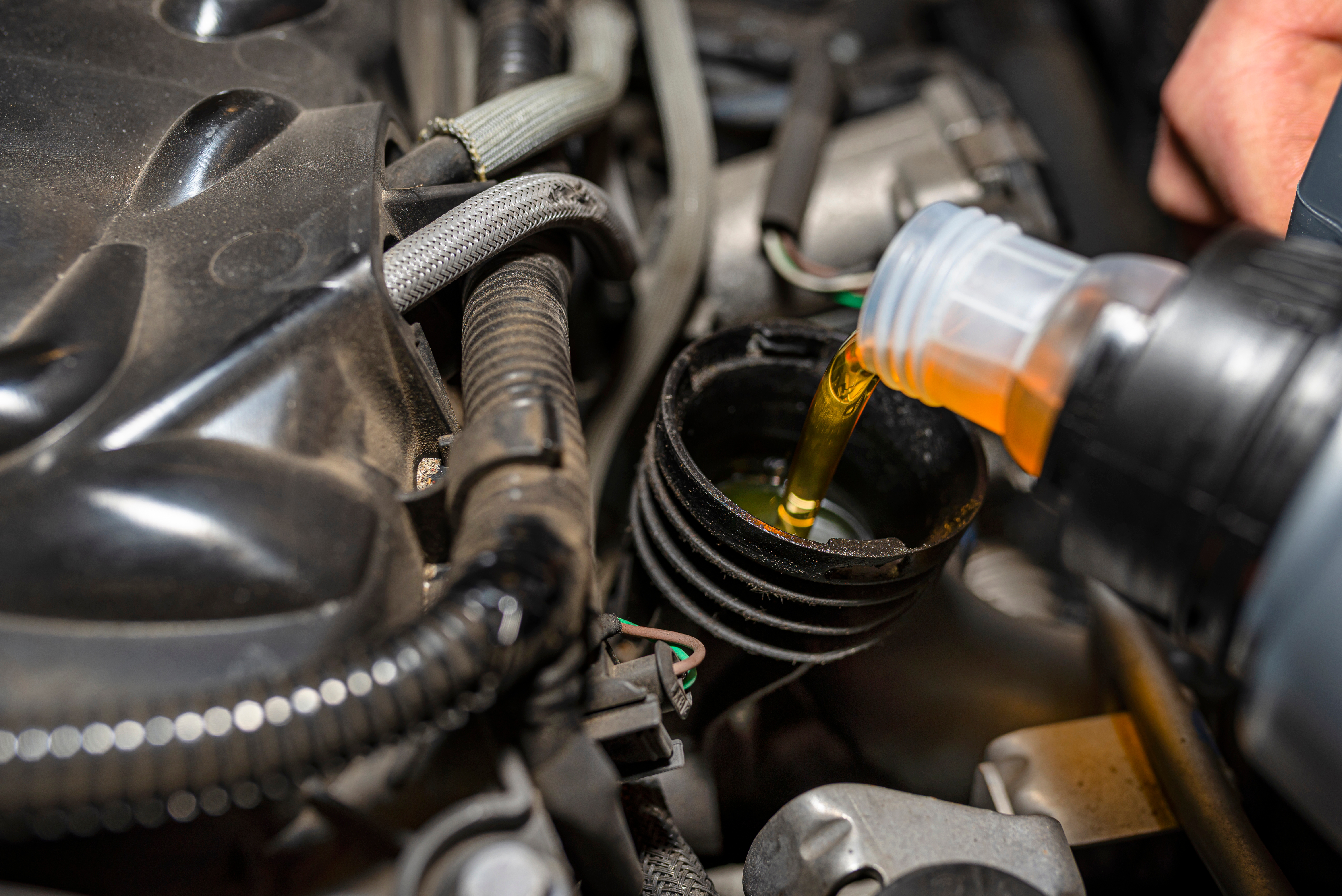
You may think that delaying that oil change appointment will not hurt anything, but your engine certainly doesn’t think so! Engine oil plays a major role in how well your car performs. It does two primary and major things for your car: it lubricates moving parts to reduce friction and it absorbs heat to regulate operating temperatures. Without new oil coursing through your engine, the metal pieces rub together, creating excessive heat and damage.
That would mean you are running your engine harder with less protection the longer you let it go between oil changes. As new oil becomes old and worn out, it loses its effectiveness in lubrication, catalyzing a series of problems:
- Sludge buildup that blocks important passages
- Warped engine parts from overheating
- Blown head gaskets requiring costly repairs
- Complete engine failure in severe cases
Following your engine maintenance schedule isn’t just a recommendation, it’s a must in protecting your investment. And when you think about how skipping this simple service could invalidate your warranty and lead to thousands of dollars in repairs, you start to appreciate just how important oil changes are.
Understanding Engine Oil and Its Functions
The right type of engine oil is what your engine needs to function optimally. Think of lubrication as the lifeblood for any engine: it forms a film between pieces of metal that otherwise would be grinding against each other at high velocity.
There are three major types of engine oil, each serving different needs of vehicles:
Conventional oil works well in older vehicles that have less complex engine designs and whose drivers stick to routine oil change times.
Synthetic oil is designed to provide superior protection for high-performance engines, in conditions of extreme temperatures and extended drain intervals.
High-mileage oil contains special additives that condition the seals and reduce oil consumption in vehicles with over 75,000 miles.
Your engine oil serves dual purposes in your car. As it circulates within your engine, it forms a thin film between moving parts such as pistons, crankshafts, and camshafts, minimizing friction that would otherwise generate excessive heat. The oil further takes up that heat in its flow, carrying it off from critical components to avoid overheating of the engine.
Your oil filter serves an equally critical function in that system. As the engine oil circulates through an engine, it picks up dirt, metal particles, and combustion by-products, all of which the oil filter catches. This filtration results in your oil remaining clean and not able to carry abrasive particles that could score engine surfaces or block narrow oil passages.
How often should motor oil be changed?
A number of factors come into play in determining how often one is supposed to change the oil in their vehicle. Your car’s make, model, and year go a long way in determining your car’s oil change interval. You may have heard that as a general rule, you’re supposed to get an oil change every 3,000 miles, but it can be anywhere from 5,000 to 10,000 miles for most new models.
Traditional vs. Modern Monitoring
Older cars have basic mileage-based schedules; check your owner’s manual for the recommended schedule for your vehicle. Newer models have sophisticated oil-life monitoring systems which calculate the best time based on a variety of factors, such as driving style, outside air temperature and mileage. These calculate when your oil really needs changing, rather than simply relying on some fixed mileage number.
When You Need More Frequent Changes
Your driving habits have a big influence on oil degradation. If you constantly experience severe service conditions, you’ll be changing your oil more frequently than the usual interval would indicate:
Stop-and-go driving or repeated idling
Towing heavy loads or hauling cargo
Driving in extreme temperatures, either very hot or cold
Operating in dusty or dirty conditions
Taking short trips frequently, less than 10 miles
These conditions prevent your engine from reaching the optimal operating temperature and allow for the collection of moisture and contaminants within the oil. Under all these conditions, your oil breaks down more rapidly and loses its protective properties much sooner than what is normally anticipated.
Signs That Will Tell You An Oil Change May Be Required
Knowing what signs and symptoms indicate that you need an oil change will save you from some costly repairs down the road. The best way to do this is with a check of your oil via a dipstick: pull it out, wipe it clean with a cloth, reinsert it fully, then pull it out again to take a look at both the level and condition of your oil.
What Your Oil Color Tells You
An oil color check provides essential information regarding your engine’s health:
Clear or brown-black oil: These colors indicate healthy oil that is doing its job right
Black, sludgy oil: Your oil has broken down and should be replaced now Milky or foamy color: This indicates a serious issue, usually that coolant is mixing with oil because of a blown head gasket or cracked engine block.
Warning Signs You’re Overdue for Service
Your vehicle will communicate when it’s time for fresh oil. Listen for these symptoms:
Knocking or rumbling sounds from the engine, degraded oil can’t properly cushion metal-on-metal contact
Reduced acceleration or sluggish performance
Oil change light illuminated on your dashboard
Burning oil smell inside the cabin
Excessive exhaust smoke, particularly blue-tinted smoke indicating oil burning
Regular checks between scheduled changes help you catch the problems earlier on. If you start to notice any of these warning signs, don’t wait-things get worse with time, and repair costs increase exponentially if you delay that oil change.
Consequences of Delaying Oil Changes
By not changing your oil or postponing doing so, you are only opening yourself up to serious potential damage from a delayed oil change that will cost you thousands of dollars down the line. The old, degraded oil becomes a thick, tar-like substance, causing engine sludge buildup throughout your engine. Sludge is clogging the oil passages and doesn’t allow fresh oil to reach critical components; thus, it starves your engine of the lubrication it needs to operate correctly. The rate of such damage accelerates the instant lubrication fails. The grinding of metal parts against each other generates excessive heat and friction, which warps the cylinder heads, damages the pistons, and may even result in head gasket failure. The replacement of one blown head gasket could cost anything from $1,500 to $2,000; a completely seized engine may need to be fully replaced, costing anywhere from $4,000 to $10,000 or more.
Your wallet isn’t the only thing that’s in jeopardy. Most car manufacturers will void your car warranty if you can’t prove you’ve kept to your oil change schedule to their specifications. That means you’ll be stuck paying for expensive repairs that would otherwise be covered. The irony? All this damage was because of the neglect of a $50-$100 service that takes less than an hour. The math is simple: spending a little now saves you from catastrophic expenses later.
Driving Conditions and their Impact on Oil Change Frequency
Your day-to-day driving and pattern of driving actually have more to do with how the oil degrades than you might realize, and if you want to safeguard your investment, you really can’t disregard driving conditions in your decision of when to change the oil.
Stop-and-go traffic: Constant idling and acceleration prevent your engine from reaching its optimal operating temperature. This causes moisture and contaminants to build up in the oil.
Extreme temperatures: Blazing summer heat and freezing winter cold make your oil work harder, speeding up its chemical breakdown.
Towing and hauling: The heavy loads create excessive heat and pressure, pushing your oil beyond its normal capacity.
Dirt roads or gravel: Airborne particles can penetrate your engine system and contaminate the oil, hence making it less functional.
Frequent short trips (under 10 miles): Your engine never fully warms up, which creates condensation, and incomplete combustion byproducts mix with your oil.
If you drive in any of these conditions on a regular basis, then your oil change interval should be 30-50% shorter than the standard recommendation. What would normally be a 7,500-mile interval might be as low as 3,750-5,000 miles under severe service conditions. A different maintenance schedule for those kinds of driving situations can normally be found in your owner’s manual.
Choosing the Right Type of Engine Oil for Your Car
Choosing the right kind of engine oil for your car isn’t just about grabbing whatever happens to be on sale at the auto parts store. Your vehicle has very particular needs, determined by several factors that directly affect engine protection and life.
1. Check Your Owner’s Manual
Your owner’s manual is your best source of information for manufacturer recommendations. It will tell you what viscosity grade (for example, 5W-30 or 10W-40) best meets the design specifications of your engine.
2. Consider Your Vehicle’s Age and Mileage
Newer vehicles: These run best on synthetic oil, which provides great protection and offers longer miles between changes.
High-mileage vehicles: Those with over 75,000 miles have high-mileage formulas which include seal conditioners to prevent leaks. Older conventional engines: May run perfectly fine on conventional oil if that’s what the manufacturer has specified.
3. Evaluate Your Driving Environment
Your driving environment matters, too. When one postpones that oil change and then drives regularly in extreme temperatures or dusty conditions, synthetic oil offers better thermal stability and contaminant resistance.
Additional investment in quality oil pays dividends in preventing possible damage that arises from the use of inadequate lubrication for a particular driving situation.
Preventing Engine Damage with Proper Maintenance
Preventing engine damage through proper maintenance begins by being proactive between your service appointments. You don’t have to wait until your next oil change to pay attention to your engine and avoid costly repairs later on.
Check Your Oil Regularly
Get into a routine of checking your oil level at least once a month. Here’s how:
Open the hood and locate the dipstick.
Pull out the dipstick and wipe it clean with a cloth.
Reinsert the dipstick back into its tube.
Pull out the dipstick once more and take an oil level reading.
The level of your oil should fall between the minimum and maximum marks on the dipstick. If low, topping it up will stop your engine from running dry and wearing out prematurely.
Check Your Oil’s Condition
While you are at the oil level, check its condition too. New oil is clear and brown-black in color, whereas worn-out oil may be cloudy or gritty. If it holds a milky appearance, then that is coolant contamination, a definite red flag, needing professional help as soon as possible.
Keep a Record of Your Tests
It is also useful to make a small log about such checks, noting the date and condition of the oil. That will help you track patterns, such as if your engine is taking more oil than expected. A good habit is to regularly make such quick inspections, which will catch potential issues early and keep your engine at top performance between professional services.
Finding Reliable and Convenient Oil Change Services in Springdale AR
For your needs regarding quick oil change services in Springdale, AR, you must seek a shop that merges technical ability with sincere concern for your vehicle. In your search for an ideal quick oil change service around Springdale, AR, ensure you don’t miss the following critical attributes:
- ASE certified technicians who bring verified knowledge and skills to every service
- A proven track record of customer satisfaction and transparent communication
- Comprehensive services that go beyond basic oil changes
- Clean, professional facilities that respect your time and comfort
We have been serving Springdale since 1988 on a foundation of trust and quality workmanship. Our ASE-certified technicians attend to every need, from oil changes to transmission repairs, with the attention that each vehicle deserves. We know your time is important to you, and we have learned how to be quick and efficient without compromising quality. W
hen you bring your car into our shop, you’re not just another appointment in the schedule but a valued customer who deserves honesty and reliable solutions that will keep your vehicle running smoothly for years to come.
Choose HCS Auto Repair
Your engine deserves better than neglect. The importance of timely oil changes can’t be stressed enough-it’s the difference between a vehicle running well for years and one that leaves you stranded with expensive repairs. Putting off that oil change? The potential damage isn’t just a warning but a reality many drivers face when maintenance takes a backseat to busy schedules.
Don’t let procrastination cost you thousands in auto repair bills or invalidate your warranty. Your car has been good to you; now it’s your turn to be good to your car. Our ASE-certified technicians treat every vehicle with the expertise and care it deserves at HCS Auto Repair so that your engine remains protected mile after mile.
Ready to get your car the TLC it deserves? Book your oil change or any car repair service today. Call us at HCS Auto Repair at (479) 751-8232 and experience the difference 35+ years of trusted service can make. Your engine will thank you.