
Snow: Snow collects soft ice crystals, which compress under the weight of your tire. Snow is different from rain in that it compresses into tire tread, lessening the latter’s road grip. White stuff on the road is hard to read, and the range of snow density, from powder to wet heavy junk, so your stopping distance can widely vary from block to block.
Driving in inclement weather entails special requirements that have a direct impact on your braking power:
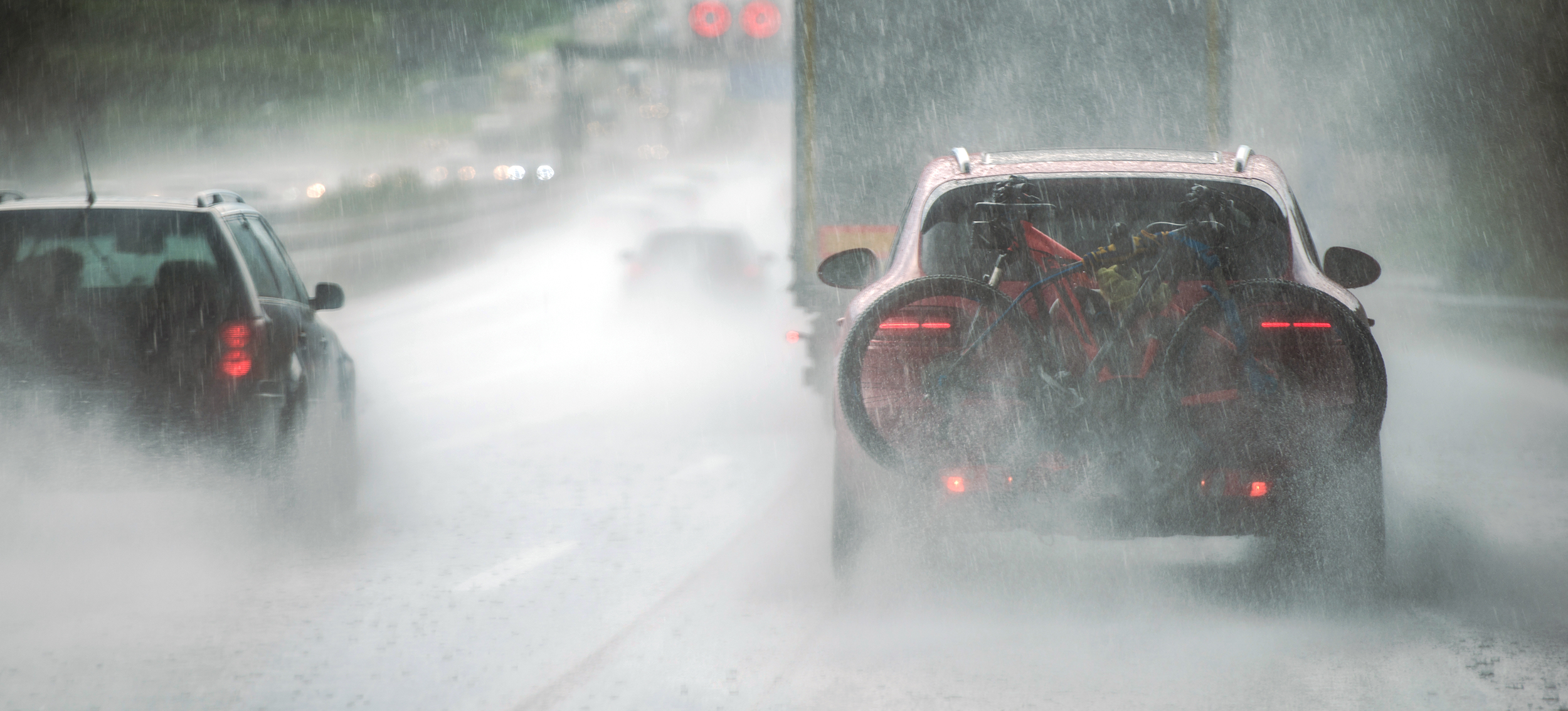
Rain is slippery and ruins tire traction.
Snow presents an untrustworthy barrier between the road and your tires.
Ice can turn roads into ice rinks where even the most advanced braking can’t manage proper control.
Many different weather conditions impact your stopping power in different ways, so you will have to adapt your driving in response. Let’s dive into what happens when you stomp on that brake pedal during the midst of the storm.
Knowing Vehicle Stopping Power and Its Components
The stopping power of your vehicle is the stopping ability of your vehicle when you step on the brake pedal. This vital safety feature relies on numerous mechanical parts in harmonious coordination.
How the Braking System Functions
Your brakes do this with brake pads that clamp on rotor discs (or brake rotors) bolted to each wheel. As you apply the brake pedal, hydraulic fluid conveys pressure throughout the system and presses the pads against the rotors, slowing down your wheels.
The Role of the Axle
The axle serves a support function of attaching your wheels to the braking system and sharing the load upon braking.
Impact of Vehicle Weight
Vehicle weight is important when it comes to how fast you can stop, thicker cars take more force and space to stop due to having more momentum. A subcompact car needs much less stopping space than a full-size pickup truck at the same speed.
Ideal Conditions vs. Coping with Deteriorating Weather
In regular driving conditions, all these parts function in concert. In inclement weather, rain or snow, pressure on your brakes is added. Your braking system will have to struggle more because it is also fighting lower traction, so the condition of every part becomes that much more important to your safe transportation on the road.
The Role of Weather in Affecting Stopping Power
When rain hits the street, it alters what you’re traveling over in a few different ways. Various weather conditions construct various hurdles for your vehicle’s stopping power.
How Different Weather Impacts Stopping Power
The following is how various weather conditions impact your vehicle’s stopping power:
Rain forms a thin film of liquid water between your tires and the road. The shield is equivalent to a microscopic slip-and-slide, blocking the direct contact your tires must have to brake well. The first few minutes of rain are most dangerous, as the rainwater mixes with the oil residue on the roads to create an even slipperier surface.
Snow: Snow collects soft ice crystals, which compress under the weight of your tire. Snow is different from rain in that it compresses into tire tread, lessening the latter’s road grip. White stuff on the road is hard to read, and the range of snow density, from powder to wet heavy junk, so your stopping distance can widely vary from block to block.
Ice: The most horrific precipitation is ice. When water freezes on the road, you’ve got an almost frictionless surface. Black ice, the hidden shine on the road, is especially sinister because it’s unpredictable. Your tires have virtually zero traction to bite into, so you’ve got a too-familiar skid when you brake.
The transition from rain to snow to ice is a developing threat to your ability to stop, with each phase requiring greater caution and greater stopping distances.
Friction and Its Important Role in Controlling Your Vehicle
Friction is the invisible force that nobody can see that allows me to move my car. When I press my brake, it is the road and the friction of my tire that bring my car to a stop. It is this combination of your tire and road that will allow you to stop smoothly or skid uselessly out of control.
How Tire Tread Is Involved in Stopping Power
Your tire tread isn’t just cosmetic, it’s engineered with certain grooves and patterns that work to push water away from where the tire is touching the road. Deep, healthy tread has many edges that bite into the roadway and cause the maximum friction needed for better braking. Tires deteriorate with age, diminishing the grooves and losing traction to cling to the road.
2/32 of an inch is the legal minimum tread depth, but you’d prefer a bit more so you can drive safely through snow. At this minimum, your tires have already lost a lot of gripping contact on the snow or slippery roads.
What Happens When Friction Is Reduced
If friction is minimized, it becomes more difficult to drive your car.
That is what might happen if you press the brakes on a frozen road with worn tires:
It requires a greater distance to stop, sometimes two or three times the distance in normal weather.
You may lose steering control as your tires fight to remain on course in the direction you are traveling.
Your vehicle will skid or slide, preventing you from steering around obstructions in your way.
The anti-lock brake system (if so equipped) will operate more often to avoid wheel lockup when stopping.
Effect of Tire Condition on Braking Performance in Inclement Weather
Your tires are your sole source of contact with the road, so tire tread depth is absolutely essential when you must make a firm stop in inclement weather. Think of tread grooves as drain tunnels which remove water, slush, and snow from the contact patch—that chunk of rubber on the road. When your tread is worn to less than 4/32 of an inch, those tunnels will be narrowed and useless, and a shroud of water slush will be the only hindrance between your tires and the pavement. When this phenomenon, called hydroplaning, happens, your vehicle will feel like it is flying with virtually zero stopping power whatsoever.
Winter tires offer a game-altering advantage when the temperature is at or below 45°F. Unlike all-season tires, they are constructed with:
Special rubber compounds that will not harden in sub-freezing conditions
Deepened treads with more biting edges for ice and snow
Unique siping (tiny cuts within the tread blocks) to provide additional grip points
Replace tires at 2/32 of an inch tread, the lowest legally allowed in most states. Quick test: insert a penny with Lincoln facing downward into the tread. If you can see the top of his head, the tires are due to be replaced. In case of winter driving, think about replacing even earlier, at 4/32 of an inch, for the utmost safety margin.
Safe Driving Habits in Hostile Weather Conditions
Your tires may be in excellent condition, but bad weather driving calls for changing your entire driving style. When the rain or snow comes down, your reaction time and driving behavior are equally important as the mechanical condition of your vehicle.
1. Slow Down
Slowing down dramatically on wet, snowy, or slippery roads. That speed limit sign? Not in ideal conditions, but in storms. Reducing speed by 30-50% provides you with valuable extra seconds to respond and provides your tires with extra time to locate a grip on the road surface.
2. Establish Greater Following Distance
Double your following distance to at least 8-10 seconds behind the front vehicle. That is your cushion for your longer stopping distance on slick roads. The best brake pads in the world won’t help you stop in time if you can’t.
3. Steer Clear of Sudden Movements
Slowly transition into it, accelerate, and brake instead of jerky movement. Jerky movement tears apart the solid grip between your tires and the road, and you’ll be gliding in an instant. To brake, slowly ease your foot down on the pedal instead of slamming it.
Winterizing Your Vehicle for Maximum Safety
Winterizing your vehicle places reactive driving into proactive protection. A full pre-season check is expected to identify potential problems before they turn into unsafe conditions on winter highways.
A complete winterization service examines essential systems that have a direct impact on your safety in the blizzard:
Brake system inspection – pad thickness, rotor status, and brake fluid
Battery testing – cold temperatures cut battery power by up to 60%
Coolant check – proper antifreeze level prevents engine damage
Wiper blade replacement – safe, clear vision during rain and snow
Tire check – ensuring sufficient tread depth to winter driving standards
Timing is everything. Getting your winterizing in early during the fall leaves you worry-free until some dude brings the first blizzard. You’ll be ready ahead of time when all the other people figure out too late that winter is coming, and you can be ready ahead of time for any work that has to be accomplished. It’s like an insurance policy, investing a little now prevents you from paying a lot more down the line, both on repair costs and on potential accident costs.
About HCS Auto Repair’s Commitment to Safety and Service
Since 1988, we at HCS Auto Repair have been Springdale’s trusted partner for comprehensive auto repair and car repair services. Our decades of experience have taught us that your safety depends on more than just fixing problems—it requires a proactive approach to vehicle maintenance, especially when weather conditions put your braking system to the test.
Our ASE-trained technicians bring specialized skills to each brake inspection and tire repair we do. Such certifications are not wall hangings; they symbolize constant training and documented proficiency in the very systems that keep you safe when roads become hazardous. When you bring your car in with us, you’re receiving technicians who realize that the key to a successful marriage between properly maintained brakes, high-quality tires, and your safety when stopping on wet, snowy, or icy roads.
We established our reputation on honest diagnoses, honest recommendations, and good work. Stopping in your vehicle is too crucial to do on an impulse, so we approach every brake pad replacement, rotor check, and tire check with the seriousness it deserves.
Choose HCS Auto Repair
Know your stopping power to stay safe and keep your passengers safe. Safe driving during bad weather starts with a well-maintained vehicle engineered to handle whatever the weather dishes out for you.
Don’t wait for that initial snow or ice storm to learn your tires or brakes aren’t ready. Contact us today at (479) 751-8232 to schedule an appointment for brake inspection or tire maintenance. At HCS Auto Repair, our staff will have you rolling through Springdale’s rough roads with security and assurance in no time. Your safety is our number one concern, let us get you back in the driver’s seat when the roads become rough.