
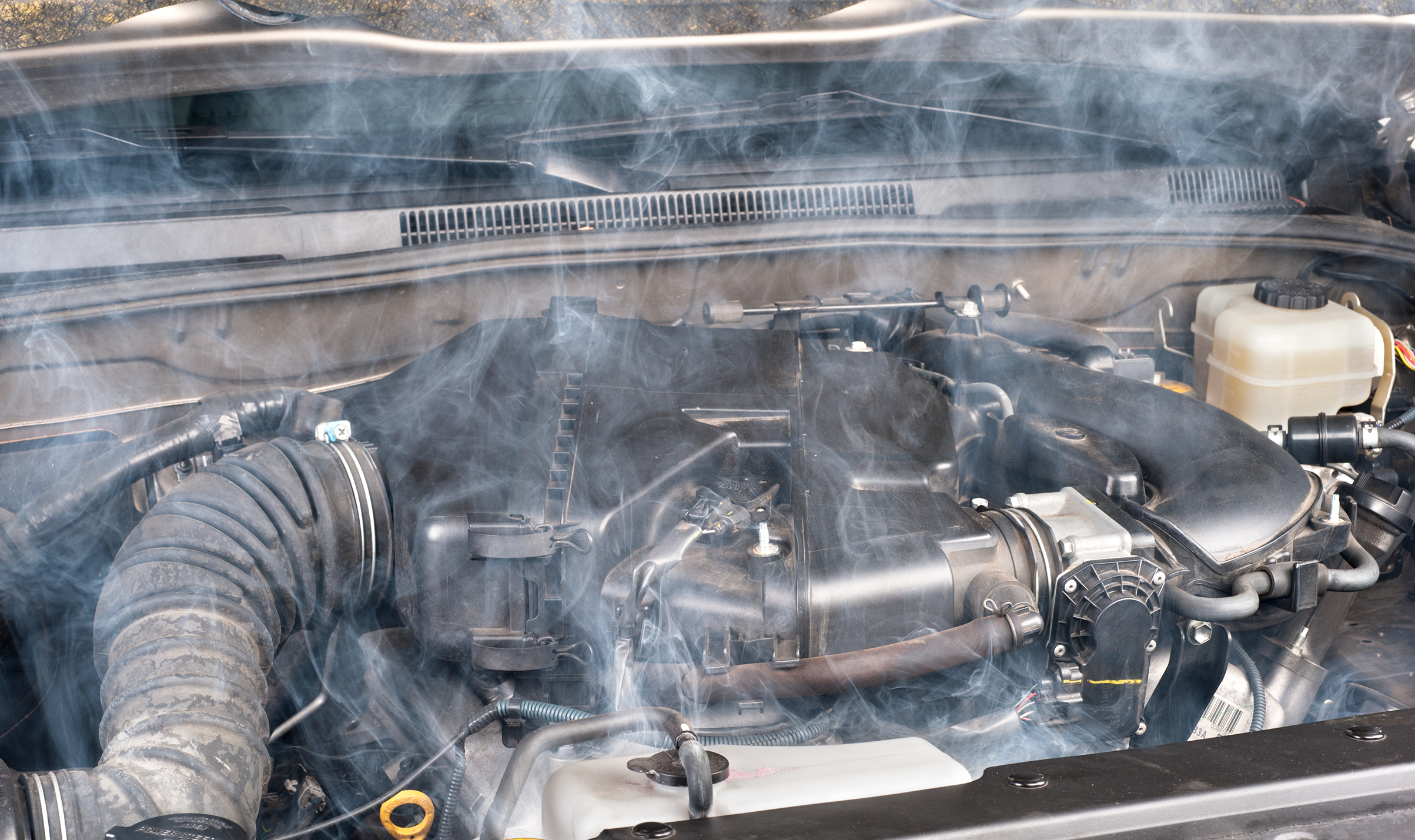
That “low coolant” light has a way of showing up at the worst time. You glance at the temperature gauge, and it looks normal, the car seems to drive fine, and for a second, it feels like maybe it can wait until the weekend.
We see this all the time at HCS Auto Repair, but here’s the honest answer: Your low coolant light being on is not a situation you should take a risk with, even if the engine isn’t yet overheating. Coolant is one of the fluids that can go from “looks alright” to “the engine is melting” faster than usual, especially if the level is below the minimum or there are bubbles of air in the system. Continue reading to find out what might happen, how long you could possibly drive (and when you should definitely not), and some easy checks that will give you an idea of the situation.
What Coolant Does and Why The Alert Is Important
Coolant is composed of antifreeze and water in a ratio of 50 to 50, which flows around the engine and the radiator. Its main function is to maintain an optimal engine temperature, and it absorbs the heat, which is then released through the radiator to the surrounding air. The more heat the coolant gets, the more it can take, so its boiling point is higher than that of regular water. Moreover, the cooling system is pressurized, which additionally raises the boiling point. Hence, the engines can operate without boiling if the system is full, complete, and working properly.
When coolant is low, the system can’t move heat the right way. You can still have a normal reading on the temp gauge for a bit, but the risk is that the cooling system loses its ability to control temperature when conditions change. Like idling at a long light, climbing a hill, turning the AC on, towing, sitting in traffic. It can turn into overheating quickly.
Is it safe to drive with the low coolant light on if it’s not overheating?
Most of the time, no, not really. It depends on how low it is.
Here’s the practical way we break it down for drivers.
If the coolant is low but still above the minimum line (and you are not overheating), you may be able to drive for a short time. Some people limp for a couple of days. We don’t love that plan, but it’s more realistic than pretending everyone can stop immediately.
If the coolant is below the minimum, our pros do not recommend starting the engine at all. Not to “just make it home.” Not for five minutes. That’s how we end up talking about head gaskets, warped cylinder heads, and huge repair bills.
A lot of modern vehicles also have protections that help, like systems that detect the lack of coolant and monitor temperature, and some even have a coolant-related shutoff strategy. Older vehicles don’t always give you that safety net. With an older car, you have to be more alert because the engine can overheat, seize, or blow a gasket before you get a clear warning.
What Actually Happens If You Run the Engine With Little Or No Coolant?
Driving with no coolant is dangerous because it can damage secondary components and even primary engine components.
The engine creates heat constantly. Without enough coolant moving through the engine and radiator, the temperature rises fast. When it rises fast, metal expands. Seals and gaskets don’t like sudden heat spikes. The head gasket is one of the biggest worries because once it fails, you can end up with combustion pressure pushing into the cooling system, coolant contamination, overheating that keeps coming back, and in the worst cases, internal engine damage.
Sometimes people tell us, “But my temp gauge didn’t move.” And yeah, that can happen! A low coolant level can leave the temperature sensor not fully submerged, so the sensor is not reading the hottest spot. You feel safe until you’re not.
A quick explanation of coolant circulation (and why hoses tell a story)
When the cooling system is working properly, hot coolant leaves the engine and enters the radiator through the upper radiator hose. The radiator cools it down, and then the coolant returns to the engine through the lower radiator hose.
So in normal operation:
The upper radiator hose will definitely be hot as it is taking hot coolant from the engine to the radiator. The lower radiator hose will be cooler since it is getting back the cooled coolant.
Cooler doesn’t mean ice-cold. Usually, it should be slightly cooler, not ice cold, and not very different at all once the thermostat is open and the engine is at the operating temperature.
One reason your upper hose could be hot, but the lower one stays cold.
This is a common case, and it may indicate a couple of things:
1) The thermostat is not opening when it ought to
The thermostat remains closed throughout the time when the engine is warmed up. During this stage, you will realize that the hoses are not hot. When the thermostat opens, the hot coolant flows to the radiator, which causes the upper hose to become heated. The lower hose will also become heated. If it is cooled and the engine is heated to an exceptionally high temperature, it may be that the thermostat is stuck in its closed state, or there may be an obstruction in the radiator, or maybe the water pump is too weak, or maybe there are low coolant levels.
2) Low coolant level or air locks
Low coolant can cause air pockets. Air doesn’t transfer heat well, and it can block flow. Air locks can leave parts of the system hot and other parts strangely cool. If you’ve topped coolant recently but didn’t bleed air properly (on vehicles that require it), you can end up with weird temperature behavior.
3) Water pump issues
The water pump is what pulls coolant from the radiator into the engine. If the pump impeller fins are damaged or worn, flow can be poor even if the pump isn’t leaking.
4) A clogged system
It’s not the most common thing because the main coolant passages are large, but it happens. Scale, debris, and sludge can restrict flow. If everything else checks out, a flush is sometimes the next step.

What If The Upper Hose Warms Up Too Early?
If the upper radiator hose starts heating up before the engine has fully warmed up, it can mean the thermostat isn’t closing properly, or it’s stuck open all the time.
A thermostat stuck open can cause its own problems. The engine may run too cool, fuel economy can drop, and the vehicle may take forever to reach proper operating temperature. Some people also notice weak heat in winter.
On the other side, if the upper hose never gets hot, that can point to a thermostat that’s stuck closed and needs to be replaced as soon as possible.
One practical method is testing the thermostat in a pot of water and raising the water temperature until it reaches the thermostat’s opening temperature (it’s usually inscribed on the thermostat). If it doesn’t open, or opens late by around five degrees, it’s replacement time.
If the thermostat tests okay, then we start thinking more about circulation and restrictions, like radiator blockage or a water pump issue.
Why Is The Lower Radiator Hose So Important?
The lower radiator hose functions as the suction side. Initially, the water pump first pulls the coolant from the radiator and then supplies it back to the engine. Such a suction can produce a negative pressure area at the bottom of the radiator, and in case the hose is not properly reinforced, a regular hose can actually collapse under the suction force.
That’s a big deal because it can mimic other problems. The engine runs hot because the flow drops, and it can come and go depending on RPM and hose condition.
Should Radiator Hoses Feel Hard When the Engine is Warm?
Usually, yes. When the engine warms up, hoses should firm up because pressure builds in the system. Radiator caps are spring-loaded and designed to control that pressure and allow coolant movement to the overflow reservoir.
Two important safety notes here.
First, never open or mess with the radiator cap when the engine is hot, you can get scalded fast!
Second, if hoses are very soft and easy to squeeze when hot, it can mean pressure is not building as it should. Sometimes it’s timing, because pressure varies. But it can also point to cooling system issues that need a closer look.
Also, rubber hoses age. Elasticity drops, cracking starts, and leaks often show up right near hose clamps. That’s one of those small problems that causes the big “low coolant” warning later.
So What Should You Do When the Low Coolant Light Comes On?
Since we always treat everyone as one of our regular customers, this is what we would recommend: Whenever possible, go to a safe location, stop your car, and let the engine cool. Emptying the coolant, if that is the case, simply means waiting till it goes back to the normal range. Besides, it is really crucial not to take off the radiator cap when the engine is hot.
After the engine has cooled, the next step is to check the coolant level in the reservoir. If it is below the minimum, you need to sort it before you proceed. On the other hand, if your coolant level is low but it is still over the minimum, you can go to the repair shop, but be careful and check the thermometer frequently.
And remember, coolant doesn’t “get used up.” If it’s low, there’s usually a leak, a bad cap, a hose issue, a radiator problem, a thermostat issue, a water pump leak, or sometimes something more serious. Topping it off without finding the reason is how people end up repeating the same problem every couple of weeks.
Choose Us at HCS Auto Repair To Help Diagnose Low Coolant Problems
We’ve been part of Springdale since 1988, and after moving to our current location in 2013, we’ve continued seeing the same pattern. A small coolant loss turns into a big repair when it’s ignored.
When a car comes in with a low coolant light, we focus on the basics first. Is there an external leak? Is the thermostat behaving? Is there circulation? Are hoses soft, collapsed, leaking, or cracked? Is the radiator flowing as it should? Is the water pump moving coolant properly? Then we go deeper if we have to.
And if we suspect restrictions, we’ll talk through the options like flushing after making sure we’re not masking a bigger problem.
If your “Low Coolant” light is on, don’t wait for the temperature gauge to scare you. That warning is your early chance to avoid serious engine damage. A quick inspection and the right repair now has been almost always cheaper than what happens after an overheat. If you want us to check it out, call HCS Auto Repair in Springfield, AR at (479) 751-8232. We’ll help you figure out why the coolant is low and get your car back to running safely.
FAQ: Low Coolant Light Questions We Hear All the Time
Can I drive if the coolant is low but the temperature gauge is normal?
Sometimes, for a short trip, if it’s still above the minimum and you’re not overheating. But it’s risky because the temperature can climb quickly as conditions change.
How long can I drive with low coolant?
If it’s low but above minimum, some drivers make it a few days. I still recommend treating it as urgent. If it’s below the minimum, I recommend not driving it at all.
What’s the fastest damage that can happen from low coolant?
Increased temperature leading to head gasket rupture is one of the most significant risks. Extreme overheating might also result in deformation of the engine parts and, consequently, major internal damage.
Why is my top radiator hose hot but the bottom hose cold?
The most frequent reasons are a thermostat that is stuck closed, a failing water pump, low coolant levels, air trapped in the system, or a blocked radiator or cooling system.
Should the bottom radiator hose be cooler than the top?
Yes. The top hose carries hot coolant to the radiator, and the bottom returns the cooled coolant to the engine.
Should radiator hoses feel firm when the engine is warm?
They usually should feel firm because the system builds pressure when hot. Just don’t touch the radiator cap when it’s hot.
Can a bad thermostat cause overheating even if the coolant level is okay?
Yes. If it sticks closed, coolant can’t circulate to the radiator and the temperature rises fast.