
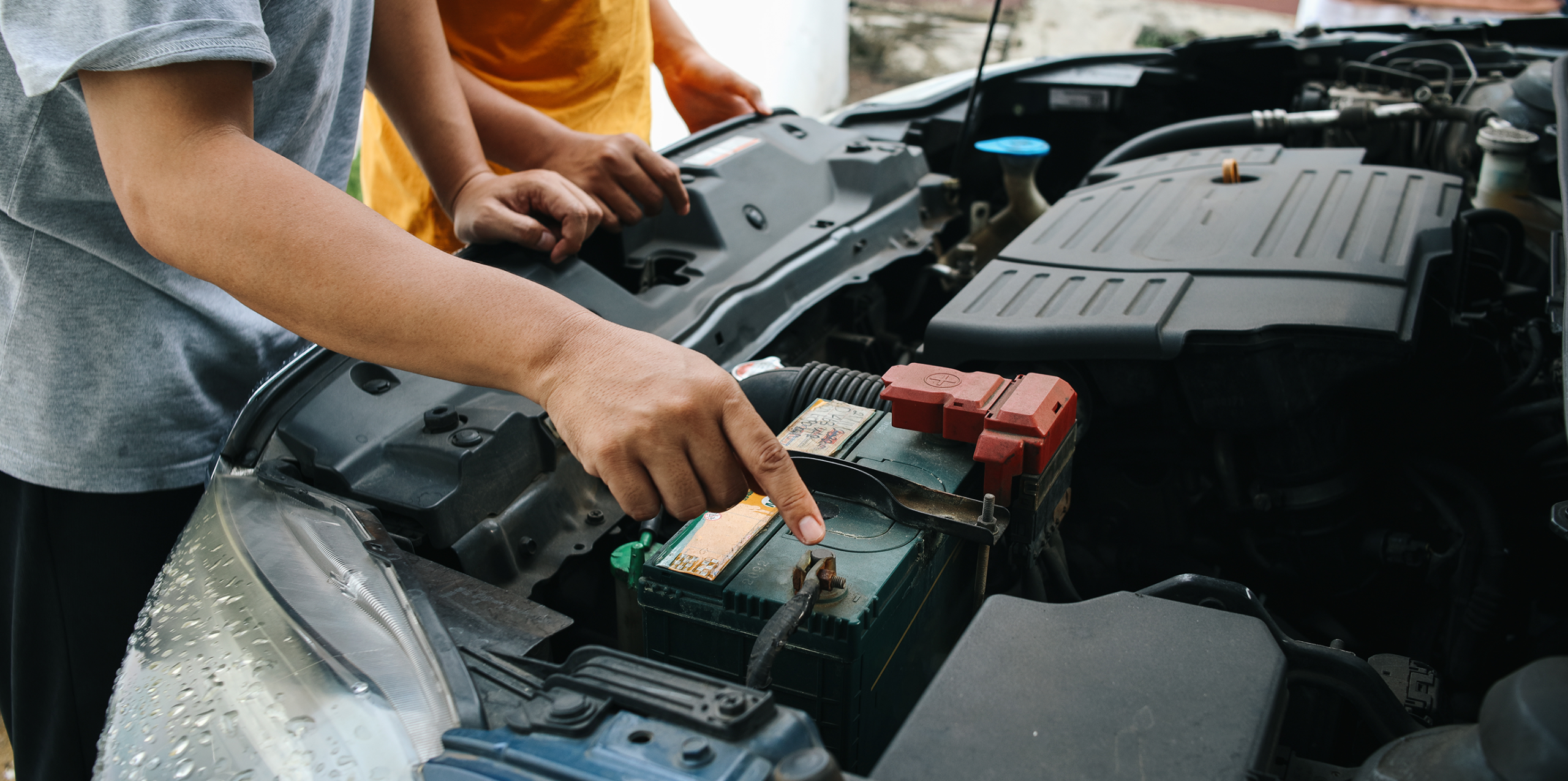
Are you thinking of storing your vehicle for winter or perhaps taking the other car for a long trip? Proper car battery maintenance is a must so that you won’t have a problem with your car starting when you return. A lot of Rogers drivers don’t realize that even if the battery is connected, its power is gradually drained, and this may lead to a dead battery, or worse, battery damage!
If disconnecting is not handled properly, it could result in electrical issues, losing major vehicle settings, or even being exposed to unsafe conditions. We at HCS Auto Repair have been providing Rogers with ASE-certified technicians’ battery care and winter storage advice since 1988. No matter what, if you are saving a classic car for the winter or just taking a long trip, we will help you to minimize repair costs or replacements upon your return, and safeguard your investment.
The Reason for Disconnecting the Battery of the Car
Your car battery does not only work when you turn the key to start-it is very much active all the time. Although your car is not moving, different systems continue to use the power. There are so many components like your clock, radio presets, alarm system, and computers that are using the battery constantly, and this is referred to as parasitic drain. If the storage of the car lasts for a long time (weeks or months), this kind of battery discharge will fully empty your battery.
A completely empty battery is in serious trouble. If the battery remains in that state, the sulfation process will occur, which means the lead sulfate crystals will be deposited and hardened on the battery plates. This will eventually lead to the inability of the battery to retain the charge; the battery’s lifespan will be significantly reduced. The prevention of such damage entails the implementation of proactive approaches, rather than a reactive operation style.
Disconnecting the negative terminal specifically offers the perfect balance of protection and practicality. This simple action:
- Stops parasitic drain immediately
- Prevents accidental short circuits (since you’re breaking the ground connection)
- Maintains your battery’s charge throughout storage
- Avoids the need for expensive battery replacement when you return
The negative terminal is your battery’s ground connection and, therefore, it is the one that is recommended to be disconnected as it is the safest one.
The Disconnection of the Battery has to be Prepared for Your Vehicle
It is necessary to take the time to prepare your vehicle before you do any work on your battery. This will keep you from getting into trouble later on and also will allow you to work with safety in mind. Here are some suggestions for getting your car ready: The fundamental actions that need to be taken to prepare the vehicle are:
Turn off the ignition completely and remove your keys from the vehicle. Keep them in your pocket or somewhere accessible-not inside the car.
Roll up all windows to their fully closed position. This prevents any electrical drain from the window motors, and simultaneously protects your car’s interior from being exposed to the elements during storage.
The windows and the light from the interior should be checked to ensure that the doors, trunk, and sunroof are closed tightly.
Disconnect and remove any accessories that are not part of the original equipment and could be drawing power, such as phone chargers, GPS trackers, or dash cams.
Once you have completed all the steps above, the battery is ready for you to work on. Search for the hood release latch in your car; it is usually located under the dashboard on the driver’s side, but in some cars, it might be next to the door frame or in the center console. Pull it and go to the front of your car to find the secondary safety latch, which is typically located at the center of the hood underneath.
Prior to touching any components of the battery, it is essential to follow the safety rules below:
Always put on safety glasses to protect your eyes from possible acid splashes.
Always wear gloves to prevent your skin from coming into contact with the battery terminals.
Remove any metallic jewelry that might lead to dangerous short circuits.
Make sure that the engine is completely cooled down before you start the job
How to Disconnect the Car Battery Correctly
Once your car is correctly set up, you can now disconnect the battery. The first thing you need to do is to locate the terminals – the positive one normally has a red cover or “+” sign, while the negative one has a black cover or “-” sign. This color coding and the symbols are common in most cars, so finding the right one is quite easy.
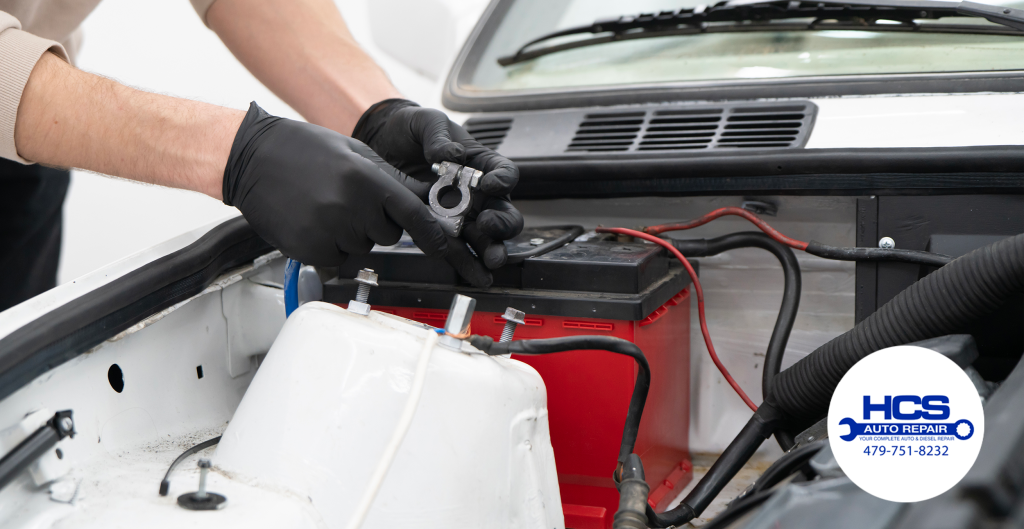
When it comes to keeping your car for a long time, removing the negative terminal is the safest way. This technique keeps electrical shorts from happening and, at the same time, protects the electronic systems of your car. In this case, the opposite would happen if you first unfastened the positive terminal, as your wrench might accidentally touch the car’s metal body, which would lead to a dangerous short circuit. The connection of the negative terminal after the positive one completely removes the danger.
Most cars will need a 10 millimeter wrench or socket as the necessary tool, although others might need different sizes. Be sure to keep this tool ready before you start:
- Position your wrench on the negative terminal’s bolt
- Turn counterclockwise to loosen the connection
- Loosen the bolt enough to slide the cable off-you don’t need to remove the bolt completely
- Gently wiggle the cable clamp to free it from the terminal post
- Secure the disconnected cable away from the battery post using a zip tie or tape
The key to proper disconnection is ensuring the negative cable cannot accidentally touch the terminal during storage. Position it carefully to maintain separation throughout the winter months.
Best Practices During Extended Storage Periods
So after you have disconnected the negative terminal, the winter storage tips for vehicles not only apply to the battery. Correctly securing your vehicle will avoid any problems that might happen during your absence.
After locking your vehicle properly post-disconnection, there is one very important point: keep the keys out of the car. Electronic locks will not work once the battery is out, and you do not want to find yourself locked out with the keys in. Manually check that all doors, windows, and the trunk are indeed closed and secured.
For vacation car care advice, consider these storage essentials:
Place the disconnected negative cable away from the terminal to prevent accidental contact
Store your vehicle in a cool, dry location if possible-extreme temperatures accelerate battery degradation
Check on your battery every 4-6 weeks during extended storage periods of 2-4 months
Consider using a battery maintainer (trickle charger) as an alternative to disconnection for storage periods exceeding three months
If it’s the maximum recommended storage time for your car, then check the battery terminals for corrosion while doing the periodic checks. Remove any dirt deposits with a wire brush and a baking soda solution to keep the connection points optimal.
Reconnecting the Battery After Storage
Just like when it was disconnected, the battery should be reconnected with a lot of care. First up, inspect the battery terminals for any signs of corrosion that could have resulted from the battery not being used. If you happen to spot any whitish-greenish stains, do not attempt to continue with the process, but rather clean them off first with a mixture of baking soda and water and a wire brush.
Reconnect the negative cable to the negative terminal, making sure that it is firmly and correctly placed on the post.
Then, using a 10mm wrench or a socket, tighten the bolt to the point of not being able to separate the joint, i.e., the connection will be very tight but will not cause the terminal to burst.
Right at the moment when the union is made, a tiny flash may be noticed, which is quite normal as the power is being restored to the electrical system again.
Before turning on the engine, make it a point to switch off all the accessories like headlights, radio, and climate controls. This will be a preventive measure to reduce the risk of an electrical surge on the system switch-on. After that, turn your key to the “on” position but don’t start the engine yet; this will allow the fuel system to pump fuel and the electronic systems to warm up.
Preventing battery consumption in the long run without using the vehicle implies knowing the possible errors. You make your battery the “silent killer” to your car’s electrical system if you leave it connected while the car is in long-term storage. Car idle does not mean power down completely; the clock, alarm, and control units are the culprits that will drain the battery over weeks and months.
The long period of time that a totally drained battery is left in one place will cause chemical changes, and small crystals of lead sulfate will form on the battery plates. Eventually, the crystals will be so hard that they become part of the plate. There is no way to get back what has been lost in this process, and the battery’s output and life span are reduced permanently. There is a chance that when you return from winter storage, the battery is completely dead and can no longer be jump-started, but in fact, a full replacement is required.
If the battery was not disconnected before storage, you might find yourself in need of a jump starter when you go to your car in storage. It is a good idea to have top-quality jumper cables or a battery booster in your garage. If a battery is not accepting any charge even after being jumped, it is a sign that the battery condition may have deteriorated to the point of no return. This situation highlights the importance of learning proper car battery disconnecting practices when not in use. Winter storage prevents you from incurring costs and frustrations in the future.
Why Choose HCS Auto Repair for Your Vehicle Maintenance Needs?
Since 1988, we at HCS Auto Repair in Rogers, AR, have built a reputation as the trusted partner for all your car repair needs in the community. Whether you are just getting your vehicle ready for the winter months or the battery has been off for a long time, and now you want to connect it back, our skilled team in battery maintenance will provide you with the best service.
We know very well that taking care of the battery is just one of the things that keep your vehicle healthy. That is the reason why our technicians are available and capable of doing everything from simple upkeep to intricate diagnostic work, which will make sure that your car gets the proper care it should have before and after the periods of storage.
Choose HCS Auto Repair
The investment is protected, and the car can start properly and without any problem when the right procedure for disconnecting the car battery in case of non-use winter storage is declared. Proper battery maintenance is a great move, no matter if you are preparing for seasonal storage or going on an extended vacation.
Need help with your battery or have questions about preparing your vehicle for storage? Our team at HCS Auto Repair is ready to provide winter car care assistance you can trust. We’ve been serving Rogers drivers since 1988, and we’re here to make sure your vehicle receives the care it deserves.
Call us today at 479-329-1478 to schedule an appointment with our ASE-certified technicians. We’re not just your auto repair shop-we’re your partners in keeping your vehicle healthy year-round.