

Have you ever forcibly put down the hood of your car just to see it spring back at you? If so, then you are in good company. A car hood that will not closed is one of those annoying issues that can turn a quick chore into a real pain in the neck. Your hood is essential for your engine and other major parts’ protection against the weather, dirt, and possible harm. When the latch does not hold properly, you have a car that is not only a nuisance to drive but also a possible danger.
On the positive side? Most of the hood closure issues are due to the same problems, which are, however, easy to detect and fix. A broken cable, a latch that is not in the correct position, or even an adjustment screw that has been turned too far are not major problems, but knowing the issue is the first move to have your hood closed again.
Tackling these issues quickly saves you from the risk of your hood flying open while driving (a dangerous scenario nobody wants to experience). It also prevents additional wear and tear on your vehicle’s components. At HCS Auto Repair in Springdale, AR, from the 1980s till now, we have encountered many hood issues, and we will support you in understanding the probable cause of your issue and applying the necessary solution.
Hood Not Closing Properly – Common Causes
If your automobile’s hood fails to lock completely, there might be numerous mechanical problems behind that issue. Understanding the problems and their effects is necessary in order to locate the main reason for the improper latching of the hood. To streamline this entire process, first, let us discuss the most frequent problems that your vehicle’s hood may experience while closing, and then we will advise you on what to check.
Hood Release Cable Issues
The principal role of the hood release cable is to link the interior release handle to the latch mechanism placed under the hood. The moment you pull that handle from the inside of your car, the cable transmits the force to undo the latch, permitting you to lift the hood. Minor troubles can occur in this seemingly simple system and cause it not to close properly.
How the Release Cable System Works
The hood release cable connects directly to a handle inside the car (typically located near the driver’s side footwell) and runs through the vehicle frame to the latch mechanism under the hood. When everything is correct, pulling the handle creates tension in the cable, which then activates the release mechanism. This system has two springs working together, one big spring that assists in closing the hood and a small spring underneath that brings the cable back to its position after you let go of the handle.
Signs Your Cable Might Be Damaged
A cable broken or disconnected from either end creates immediate problems. You’ll notice these warning signs:
- The release handle feels loose or offers no resistance when pulled
- You can pull the handle, but the hood doesn’t pop open
- The cable appears frayed, kinked, or corroded when inspected
- The hood won’t latch properly even when you press down firmly
Why Cable Problems Prevent Secure Latching
A faulty release cable can leave the locking system in a partially engaged state. If the little spring that brings the cable back to its initial position gets unfastened or is broken, the cable remains in the “pulled” state. As a result, your latch does not completely reset, and the hood cannot catch and secure properly when you attempt to close it.
To determine whether the cable is the one, you have to check the two connection points. To begin with, make sure the cable is attached tightly to the interior release handle. After that, let somebody draw the handle while you observe the latch mechanism underneath the bonnet. The cable should operate without any snags, and both springs should be connected correctly. If you see that the cable does not come back to its initial position after pulling, or one of the springs is detached, then you have found the fault.
The Importance of Both Springs
A lot of people are not aware that both springs in the hood release system are very important. The larger spring supplies the necessary tension to keep the hood shut and also assists it to snap into place. The smaller spring makes sure that the cable goes back to its neutral position, allowing the latch to reset. If one or even both of the hood springs become unfastened during car service or regular maintenance, the hood will not close correctly anymore. The springs may even get loosened little by little, especially if the car is constantly experiencing a lot of vibration or if the technician has recently worked under the hood without closing the parts properly.
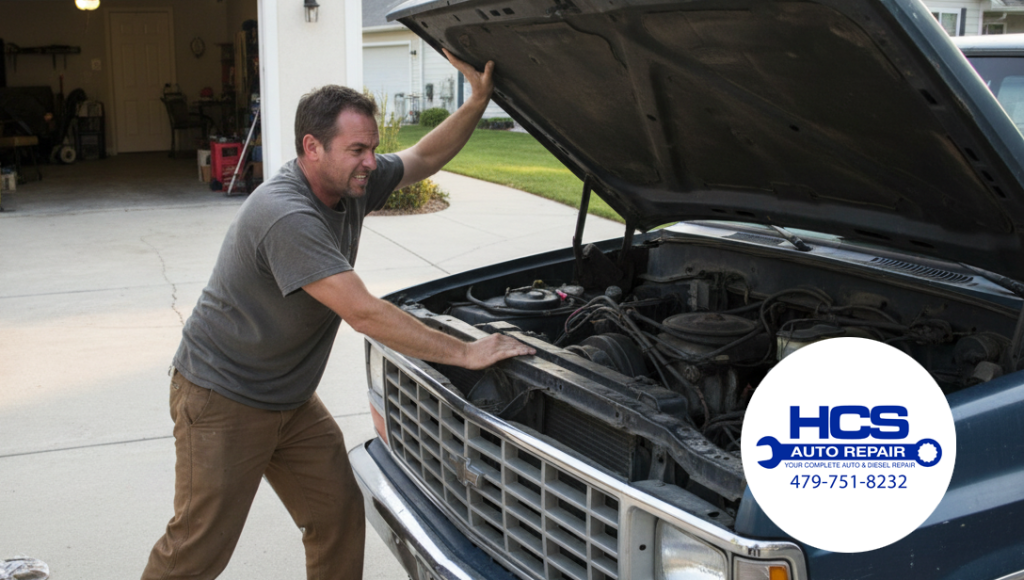
Hood Latch Mechanism Misalignment or Hood Adjustment
The latch mechanism is the main locking system for your hood, which holds it tightly closed during driving. If this element gets out of alignment or is wounded, the hood will keep being open despite all your efforts to close it. The latch is working based on a very simple but accurate catching system, when the hood is down, a metal striker hits that area where the latch is placed, and the metal is then locked. Even if the slightest part of the whole system is not working properly, the connection won’t be made.
Common latch problems include:
Physical damage to the latch assembly from accidents or impacts
Misalignment caused by vibration over time or improper previous repairs
Worn or broken internal springs that prevent the latch from engaging
A bent striker plate that can’t properly connect with the latch
During auto repair diagnostics, technicians often find that the latch itself is malfunctioning and needs replacement. You might notice the latch appears loose, doesn’t spring back into position after being released, or shows visible signs of wear. The broken cable or release cable issues we discussed earlier can also affect latch performance since these components work together as a system.
Hood latch adjustment is very important for correct closure. Even if the latch is still in good condition, bad positioning will prevent the striker from catching with the latch. Your hood might not close properly, it can bounce back when you try to close it, or the latch will make a noise as if it is trying to engage without success. The car repair professionals recognize that latch alignment checking should be among the first steps in troubleshooting hood closure issues.
Defective or Unhooked Springs Hindering Hood Function
The dual-spring system is what your car hood relies on for proper functioning, and if these springs become unhooked or fail, you will definitely notice the problem with your hood closing. The springs are working together to provide the exact amount of pressure required for the smooth operation, one spring is for the release, while the other one is for the closure.
The two-spring system includes:
Primary spring: Controls the hood’s closing action and maintains proper tension
Secondary spring: Pulls the release cable back to its resting position after you open the hood
The moment one or both of the hood springs cut loose, the entire system is thrown out of balance. Sure, you can pull the release cable from the car’s interior, but since there is no spring to push it back, the latch remains unengaged.
The unfastened springs ultimately lead to more problems than just an open hood. In the absence of spring tension, the hood latch cannot be properly engaged with the catch mechanism. You will be pushing down the hood, but you won’t hear the click that indicates the closure is secure. The unfastened or broken spring sets off the process, the release cable remains slack, the latch mechanism is not reset, and your hood remains unlatched.
Inspecting both springs during your car repair diagnosis is essential. Look underneath the hood latch assembly where these springs attach to small hooks or posts. Even if your release cable appears intact, missing spring tension explains why your auto repair issue persists.
Incorrect Adjustment of Hood Height and Support Components
Your vehicle’s hood depends on multiple adjustment points to be at the right height for proper closure. The adjustment screws are placed around the hood area at almost strategically correct points, you will usually find them at the front corners where the hood meets the latch, and occasionally on the hood itself. When the screws have been worked on or have shifted over the years, they can become so extended that they will not allow your hood to close.
Here’s what you need to check:
Height adjustment screws: These small but crucial components can be screwed in or out to raise or lower the hood’s position. If they’re extended too much, your hood will sit too high to engage with the latch mechanism
Hood support shocks: When your shocks are short or failing, they affect how the hood sits and moves. You might notice your hood won’t stay up on its own, which is a clear sign these components need attention
Multiple adjustment points: Most vehicles have several adjustment locations—check the front latch area and look for additional screws on the hood itself
Throughout the troubleshooting process, make sure to carefully check each adjustment location. A minor movement of the screw by a quarter turn can sometimes be the cause of a slightly opened hood versus a tightly closed one. These adjustment screws are frequently the reason if your hood has been difficult to close after a recent auto repair. It is possible that the technician altered their positions without even noticing during the car’s service.
Diagnosing Hood Closure Problems at Home and When to Seek Professional Help
Before visiting an auto repair shop, some basic diagnostics of the car can be performed right in the driveway. The first step is to have someone pull the hood release handle while you observe the cable mechanism. The cable should be able to move freely and go back to the position it is supposed to be in when released. If it does not retract or is moving very slowly, then you have located the issue.
Your inspection checklist should include:
Cable Connection Check – Verify the cable is firmly attached to both the release handle inside your vehicle and the latch mechanism under the hood. Look for fraying, kinks, or disconnection points.
Spring Examination – Locate both springs on the latch assembly. The larger spring controls the hood closure, while the smaller one returns the cable to its original position. Both must be properly hooked for the system to work.
Latch Condition Assessment – Open and close the latch manually several times. It should move freely without sticking or grinding. Any resistance indicates wear or damage.
Adjustment Screw Inspection – Check all height adjustment points on the hood corners and latch area. If they’re extended too far, your hood sits too high to engage the latch properly.
Resolving car hood issues is a safety-first issue. A prop rod should be used, or somebody else should hold the hood while you work under it. Do not ever take a faulty latch as a guarantee that the hood will stay open. In case your inspection shows a broken latch mechanism, greatly damaged cables, or if you are not sure about doing these checks, the professional diagnosis is the only option. Repairs where the latch assembly and cable routing through the vehicle body are involved are complex and require special tools and expertise.
The Importance of Professional Auto Repair Services in Fixing Hood Closure Problems
While some hood issues can be fixed at home, there are times when you need the help of trained experts. Our ASE-certified technicians are in full control, as they are equipped with specialized knowledge gained from years of experience. Hood-related matters will not be able to get through the team without being handled properly. Springdale has been our base of operations since 1988, and with that, we have established a reputation for the best car repair service, approaching vehicle problems with precision and care, no matter how challenging those problems may be.
How We Diagnose Hood Closure Problems
Our team has a meticulous approach to dealing with hood closure issues. They not only replace the broken parts but also investigate the causes and then find a solution to that problem. This is how they do it:
Inspecting the release cable mechanism: This is the part that connects the hood latch to the lever inside your car. If it is damaged or misaligned, your hood may be improperly closed.
Checking the latch assembly: The latch is responsible for keeping your hood shut securely during your drive. We will ensure that it is operating fine and that it is not worn out.
Testing spring tension: Some hoods are fitted with springs that assist in keeping them closed. In the event that these springs are either too tight or too loose, it will affect the quality of your hood’s closure.
Adjusting components as needed: There are instances when just a simple adjustment is sufficient to return everything to the state of proper functioning.
Through an assessment of the different aspects of the hood system, we can not only recognize the present problems but also discover the hidden ones that might arise in the future. This means you will not receive just a temporary fix; rather, a long-lasting solution will be provided.
Why Choose HCS Auto Repair?
There are numerous auto repair shops around, yet still, why would you pick us? Here are some reasons why:
Comprehensive system evaluation: We don’t just focus on the problem that is visible; we also investigate for any hidden issues that might create inconvenience in the future.
Professional-grade tools and equipment: The use of high-quality tools is a practice among our technicians so as to get the most precise adjustments and repairs possible.
Experience with a wide range of makes and models: Be it a sedan, an SUV, or a truck, we have the experience of dealing with all vehicle types.
Quality replacement parts: In case any parts need to be replaced during the repair process, only parts that are equal to or superior to the manufacturer’s specifications will be used.
At HCS Auto Repair, we do not consider you just a customer. We consider you a friend when you leave your vehicle with us. It is our aim to create lifetime relationships with everyone who visits us by giving out the best service possible every time.
The Benefits of Expert Intervention
There are times when it is so convenient to do it yourself or let the other shops do the quick fixing. Yet this mostly causes newer and bigger problems that in the end will take a more expensive repair and longer time.
The value of expert intervention becomes clear when:
- Your hood closes smoothly and securely after our repairs
- You feel confident knowing that trained professionals worked on your vehicle
- You save time and money by avoiding future issues caused by improper fixes
With each repair we perform at HCS Auto Repair, we’re committed not only to restoring your vehicle’s integrity but also to enhancing its performance.
Peace of Mind on Every Journey
The thrill of driving on an open road cannot be surpassed, and it is even better when one is totally sure that nothing is wrong (pun intended), actually. It is not much of a difference if one is only doing minor jobs in the city or has a major road trip, the state of the car is always a plus. In case you are having problems with the hood not closing or simply want a skilled technician to oversee your vehicle, then our shop is definitely the right place to go!
Preventative Maintenance Tips to Avoid Future Hood Problems
Being proactive about preventative maintenance can eliminate the need to deal with difficult hood closure problems. A few simple car repair tips added to your regular auto care routine will ensure a smooth functioning hood for many years to come.
1. Establish a Regular Inspection Schedule
Cultivate the habit of visually inspecting your hood components at least every two months. The hood release cable should be checked for possible fraying or wear, the latch mechanism for rust or damage, and the correct attachment of the two springs confirmed. Additionally, don’t forget to carry out the hood shocks test – if your hood is not held up by itself, then the shocks replacement is needed before the problem affects other components.
2. Keep Everything Clean and Lubricated
Dirt, grime, and moisture are the worst enemies of your hood mechanism. Clean the latch assembly and cable connections from time to time, and also remove the dirt that could cause a problem with the operation. A light application of lithium grease or silicone spray should be done on the movable parts, such as the latch, springs, and cable. This easy and quick step fights against rust and lessens the friction, which is one of the main reasons for the premature wear of parts.
3. Partner with Professionals in Routine Care
When you bring your car to us at HCS Auto Repair for periodic maintenance, the skilled technicians are able to detect possible problems with your hood before they cause you to be left in a situation with an open hood. The adjustment screws will be checked, the cable tension tested, and all the components will be made to function together in perfect harmony. The small issues that are caught during these routine inspections will not only be fixed easily, but will also prevent costly repairs that could have been required later on.
Choose HCS Auto Repair
A hood that can’t be closed is more than just a nuisance, it’s a problem that poses a hazard and requires immediate fixing. Quick intervention on these issues keeps your car from getting worse and saves your life on the highway.
We at HCS Auto Repair have been a reliable provider of auto repair in Springdale since 1988. Our ASE-certified specialists are capable of finding the exact source of a hood closure problem and solving it well, whether it is a matter of merely adjusting springs or replacing latches. For us, you are not merely a customer; you are a friend and a lifelong customer.
Do you want to make your hood work as it should again? Don’t hesitate, call (479) 751-8232 to book your visit now. Whether your vehicle just needs a beer or a full round of repairs, our team is ready to regain your vehicle’s integrity and guarantee your safe return to the road.