
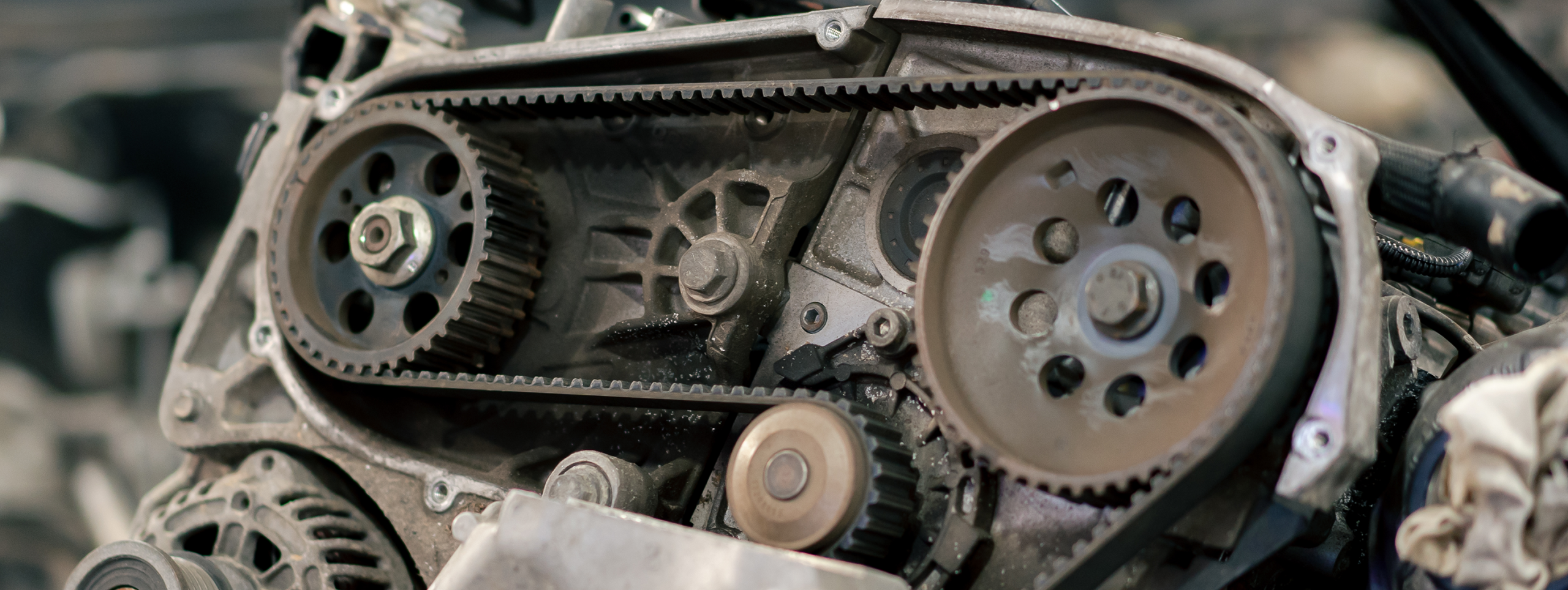
Your car’s timing belt is crucial for a smooth running engine. It synchronizes the crankshaft and camshaft rotation, ensuring the valves open and close at the right time for optimal performance.
If the timing belt snaps, it can cause severe engine damage if not fixed quickly! We at HCS Auto Repair have encountered failed timing belts before, and know how important this problem is to have fixed right and fixed quick.
Repair Process for a Snapped Timing Belt
The repair process for a snapped timing belt involves:
- Thorough inspection of engine components
- Removal of damaged parts
- Installation of new timing belt kit
- Replacement of affected components
- Precise timing adjustments
- Testing and verification
Early Warning Signs of Timing Belt Issues
Recognizing early warning signs of timing belt issues can save you from expensive engine repairs. Common indicators include:
- Unusual engine noises
- Starting difficulties
- Poor engine performance
We’re equipped to diagnose and repair timing belt problems before they escalate into major mechanical failures.
Identifying Signs of a Snapped Timing Belt
A snapped timing belt often reveals itself through distinct warning signs. Your vehicle might refuse to start, or you’ll hear unusual noises coming from the engine compartment. In severe cases, the engine might stop running completely while you’re driving.
Let’s look at a real-world example from previous cases:
Key Warning Signs We Found:
- Engine cranking but failing to start
- Fan belt turning while upper engine components remain static
- Unusual sounds during start attempts
- Complete loss of engine power
During our initial inspection, we perform a simple yet crucial test. By connecting a booster pack and attempting to start the engine, we observe the fan belt’s movement while monitoring the upper engine components. This test often reveals a telltale sign, the crank is turning (evident from the moving fan belt), but the upper engine components remain stationary.
Quick Check You Can Do:
- Turn your key in the ignition
- Listen for unusual clicking or grinding sounds
- Watch for engine cranking without starting
- Pay attention to any loss of power while driving
Pro Tip: Regular timing belt inspections are crucial – don’t wait for these symptoms to appear; preventive maintenance saves you from costly engine repairs!
Inspecting the Timing Belt Area
Getting to your vehicle’s timing belt requires careful disassembly of several components. Here’s what our technicians do to access and inspect this crucial part:
1. Remove the Scuttle Panel
- Creates additional workspace
- Improves visibility of the engine components
- Makes the repair process more efficient
2. Air System Components
- Take out the air filter
- Remove the air box
- Disconnect and clear away boost pipes
- Check air filter condition (look for excessive dirt or debris)
3. Wiring and Covers
- Carefully move the wiring loom aside
- Remove top timing cover bolts
- Clear away any mud or debris around Torx bolts
- Take off the alternator belt
4. Crank Pulley Inspection
- Check for free movement
- Look for cracks or damage
- Assess if replacement is needed
The timing belt area inspection might reveal various issues, from missing teeth to complete belt failure. A thorough examination of all components helps determine the full scope of necessary repairs.
Assessing Damage and Determining Repairs Needed
A thorough inspection of the timing belt area reveals several critical signs of damage you need to watch for:
1. Missing or Damaged Teeth
Look out for the following signs indicating missing or damaged teeth on the timing belt:
- Complete tooth obliteration on multiple sections of the belt
- Visible gaps where teeth should be present
- Scattered teeth fragments in the engine compartment
2. Internal Component Damage
Be vigilant about potential internal component damage, which may include:
- Needle roller bearings scattered throughout the engine
- Damaged followers and lifters
- Compromised vacuum pump with debris buildup
- Potential valve spring damage
3. Crank Pulley Assessment
The crank pulley requires immediate replacement when you notice any of the following issues:
- Visible cracks on the surface
- Free-floating movement
- Inconsistent rotation
- Deteriorated surface texture
4. Hidden Damage Indicators
Keep an eye out for hidden damage indicators that could signify underlying problems:
- Silicon debris blocking the vacuum pump
- Needle rollers wedged between valve springs
- Oil contamination from broken components
- Damaged return holes affecting oil circulation
Our inspections reveal extensive damage that can occur beyond initial timing belt failure. The presence of scattered needle roller bearings and multiple obliterated followers indicate a comprehensive repair will be necessary. These findings highlight the importance of regular timing belt maintenance to prevent cascading engine damage.
Replacing Components and Finalizing Repairs
The repair process requires precise attention to detail when replacing key components. Here’s what you need to know about the replacement procedure:
Cam Shaft Installation
- Clean the new cam shaft thoroughly before installation
- Align the keyway properly during cam shaft pulley mounting
- Check for smooth rotation with no tight spots
- Verify the timing pin alignment points
Vacuum Pump Replacement
- Remove old vacuum pump carefully
- Clean any silicone residue from previous repairs
- Check for debris or blockages in the vacuum system
- Install new seals and gaskets
- Ensure proper mounting alignment
Throttle Body Setup
- Remove throttle body for better access to other components
- Clean mounting surfaces thoroughly
- Position correctly during reinstallation
- Check for proper clearance with surrounding components
Component Torque Settings
- Cam carrier: 3 Nm initial torque
- Follow up with 10 Nm in a spiral pattern
- Use manufacturer-specified torque values for all fasteners
Repairs usually include installing a new timing belt kit with fresh components, such as a new idler pulley, an updated tensioner, and a crank pulley bolt. Alongside the timing belt kit installation, a water pump is also replaced to ensure reliable cooling system performance and to prevent future leaks or failures commonly associated with aging water pumps. This comprehensive approach provides enhanced durability and long-term peace of mind for your engine.
Each component requires precise positioning and proper torque specifications to ensure optimal engine performance. A methodical approach to component replacement helps prevent future timing belt failures and maintains engine timing accuracy.
Cleaning Up and Testing After Repairs
A thorough cleanup and testing phase is critical to ensure your engine runs smoothly after a timing belt repair. Here’s what we do at this stage:
Oil System Inspection
- We drain the old oil completely to remove any potential metal debris
- A careful inspection of the oil filter reveals any concerning particles
- The sump gets a detailed examination for needle rollers or other damaged components
- Fresh oil is added to the correct level for optimal engine performance
Final Component Installation
- A new water pump goes in as a preventive measure
- The oil filter housing receives a new O-ring and proper lubrication
- We clean all surfaces meticulously before reassembly
Testing Protocol
- Initial engine start with a booster pack to check timing
- Brief test run to verify proper operation
- Close monitoring of engine performance during initial startup
- Temperature checks to ensure proper system operation
The cleaning and testing phase might seem time-consuming, but it’s essential to catch any potential issues. A single missed needle roller or debris particle could cause significant engine damage down the road.
Choose HCS Auto Repair
A snapped timing belt requires immediate attention from skilled professionals who understand the complexities of engine repair. At HCS Auto Repair in Springdale, AR, our ASE-certified technicians bring decades of experience diagnosing and fixing timing belt issues.
We’ve been serving the Springdale community since 1988, setting the benchmark for excellence in auto repair services. Our comprehensive approach includes:
- Thorough diagnostic processes
- High-quality replacement parts
- Meticulous attention to detail
- Complete testing after repairs
Don’t wait until your timing belt fails completely. If you notice any warning signs we’ve discussed, bring your vehicle to HCS Auto Repair. Our skilled team is ready to help keep your car running smoothly and prevent costly engine damage.
Ready to schedule an inspection or repair? Call us at (479) 751-8232 or visit our shop in Springdale, AR. Trust us to restore your vehicle’s integrity and enhance its performance with our quality service.