
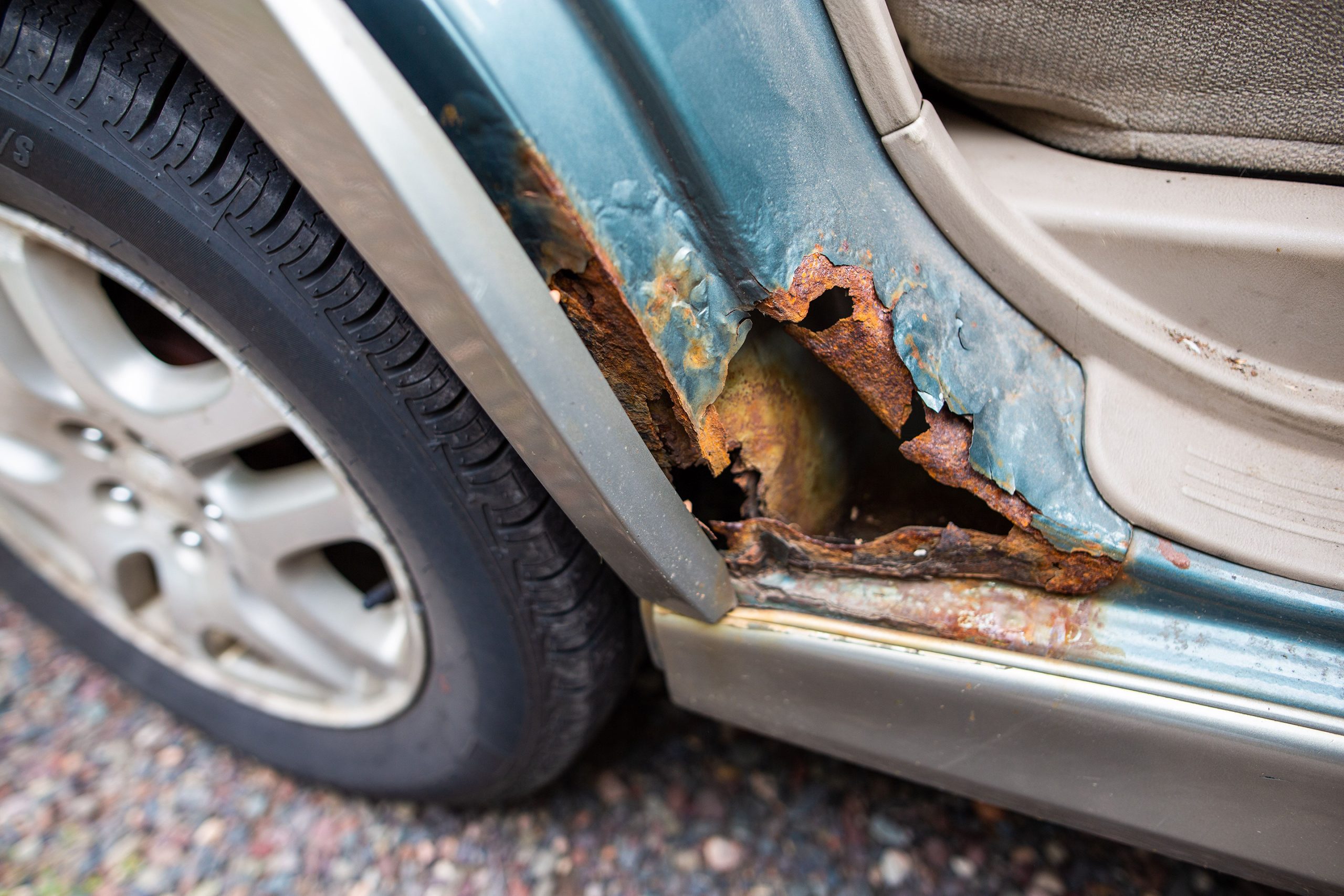
Rust holes in your car are not only unattractive – they can jeopardize your vehicle’s structural soundness, safety, and performance. Such unwanted issues may develop in essential locations, such as suspension points and floorboards, destabilizing your vehicle and compromising interior protection.
We’ve compiled this step-by-step guide so you can approach rust repair professionally and confidently. You’ll discover expert techniques for detecting, preparing, and repairing rust holes with the proper tools and materials. Our pro tips include everything from surfacing preparation to welding techniques that result in a permanent repair.
Whether you are working with a small spot or a big rust hole, this guide will provide the information to get your car back to its original condition and prevent rust from happening in the future.
Knowing Rust Holes
Rust holes in your car can create highly hazardous compromises to structural integrity and safety. Those small minor flaws can quickly become a huge issue, mainly when they occur in vital areas such as:
- Suspension mounting points – compromising vehicle stability
- Floor panels – affecting interior protection
- Frame rails – weakening the vehicle’s core structure
Common Sources of Rust Development
Water leaks from damaged convertible seals are a primary culprit in rust formation. Plugged drainage channels provide space for water to collect and initiate the corrosion process. Factory holes inadequately sealed with adequate grommets provide moisture penetration, while compromised undercoating exposes metal surfaces. Additionally, trapped moisture in body panel seams provides a perfect environment for the development and progression of rust.
Rust typically means repeated water exposure by the metal. Make sure to find and fix these water sources – a rusty floor pan could indicate a convertible seal leak or inadequately sealed factory drainage holes. If left unaddressed, these problems are a cycle of repeated rust accumulation, and the structural damage they create can be extremely severe.
Tools and Materials Needed for Rust Repair
A successful repair of a rust job involves specific tools and materials. Below is what you will need to do it:
Basic Tools
The main welding equipment is the MIG welder gas equipment with 25% CO2 and 75% argon mix. The rust stripping and surface preparation equipment is the angle grinder with the wire wheel attachment. An electric drill with a sheet metal nibbler attachment enables clean cutting of damaged sections. A digital caliper is necessary to measure metal thickness correctly. A complete 12mm socket set facilitates disassembly and reassembly of parts. Metal files make fine adjustments and ensure proper fitment as part of the repair process.
Sheet Metal Options
When choosing sheet metal for rust repair, salvage yard panels are a budget-friendly choice that can be cost-effective without compromising original equipment quality. Aftermarket replacements are ideal for large-scale repairs, providing a trustworthy alternative where salvage parts are unavailable. The standard 24-gauge steel sheets with an approximate thickness of 0.6mm offer a general-purpose alternative that is adequate for most applications of automotive rust repair.
Safety Equipment
Basic protection begins with an N95 dust mask, but a full-face mask with P100 filters with 99.97% dust filtration is ideal for a closed environment. Safety glasses or goggles are necessary to protect your eyes throughout the repair process. Work gloves must always be worn to prevent your hands from coming into contact with sharp edges and chemicals.
Additional Materials
Acetone or isopropyl alcohol is needed for surface preparation in rust repair. The abrasion needed to remove rust and prepare surfaces is provided by the 80-grit sandpaper. Impermeable paint is a vital sealing compound used to seal repaired surfaces. Rubber grommets seal factory holes sufficiently to stop moisture and future rust problems.
Ventilation System Components
A comprehensive ventilation setup requires several key components working together. The 6-inch ducting tube is the primary air flow conduit, and a high-volume blower motor powers the airflow through the system. An air filter system traps harmful particles from spreading into the work area. These items operate together to provide a negative pressure system, which traps contaminated air in and sucked out of the work area.
Remove your vehicle battery before welding to protect the vehicle’s electrical system and sensors. Your sheet metal thickness will determine your welder settings – for standard 24-gauge metal; voltage should be at 3 and wire-speed at 25.
Step 1: Preparing the Vehicle for Repair
Proper vehicle disassembly is crucial for accessing rust holes effectively. Here’s what you’ll need to remove:
- Front seats – Disconnect the battery and unbolt the seats using a 12mm socket
- Door sill trim – Carefully pry off to expose floor edges
- Center console – Remove if it blocks access to the affected area
- Floor mats – Pull out to reveal the carpeting underneath
- Carpeting – Gently lift and pull back to expose the metal floor
A clean workspace allows better visibility and maneuverability during repairs. Consider keeping taken-out parts in marked containers to keep hardware tracking and allow for proper reassembly later.
Pro tip: Photograph parts before and during removal to document their original locations and wiring harnesses.
Step 2: Removal of rust and surface preparation
Rust removal needs attention to detail and precautions. Firstly, wearing your full-face mask with P100 filters or N95 dust mask is recommended, especially when operating in an enclosed area. The P100 filters contain 99.97% dust filtration to shield you from hazardous particles.
Removing Rust
Remove rust using a wire wheel attachment on your angle grinder. This tool is very effective at removing surface rust and enables you to see the distinction between surface corrosion and heavily damaged areas.
Cleaning Checklist
Your cleaning checklist should include:
- Complete floorboard sanding
- Thorough inspection of nooks and crannies
- Removal of all seam sealer
- Stripping of old undercoating
- Cleaning with isopropyl alcohol or acetone
Dust Removal System for Confined Spaces
For optimal results in confined spaces, set up a dust removal system using:
- 6-inch ducting tube
- Blower motor
- Air filtration system
This setup creates negative pressure, helping to extract harmful dust particles while you work. A properly cleaned surface ensures better welding adhesion and prevents future rust formation under your repair patch.
Step 3: Cutting, Shaping, and Welding the Patch In Place
Precise sheet metal cutting and shaping create the foundation for a successful rust repair. Start cutting the replacement piece by using a sheet metal nibbler or cut-off wheel on your angle grinder. Create reference marks on your new sheet metal that align with the existing hole’s shape, ensuring accurate positioning during installation.
Pro Tip: Always cut your patch slightly larger than needed. You can easily remove excess metal, but adding more is impossible.
The welding process requires careful preparation and technique:
- Butt Welding – Recommended for floor panels and quarter panels
- Creates seamless joints with no gaps
- Eliminates potential rust spots
- Takes more time but delivers superior results
- Lap Welding – Alternative method
- Faster and easier to execute
- Higher risk of moisture trapping
- Less durable than butt welding
For MIG welding thin sheet metal:
- Use 0.025-inch wire for 24-gauge (0.6mm) metal
- Set voltage to 3V with wire speed at 25
- Mix gas: 75% argon, 25% CO2
- Flow rate: 10 liters per minute
Start with tack welds at multiple points to secure the patch. Stitch weld between these points to prevent warping from excess heat. Use copper or aluminum as heat sinks when filling larger gaps. Remember to disconnect your car’s battery before welding to protect electronic components.
Step 4: Finalizing the Repair and Preventive Measures Against Future Rust
After completing your welding work, proper sealing and protection become crucial for a lasting repair. Here’s how to protect your newly patched area:
1. Surface Preparation
- Sand the welded area with 80-grit sandpaper
- Clean thoroughly with isopropyl alcohol or acetone
- Allow the surface to dry completely
2. Paint Application Tips
- Pour paint into a separate container to preserve the remaining paint
- Add compressed air to the original paint can to displace oxygen and extend shelf life
- Apply multiple thin coats of impermeable paint
- Paint both the interior and undercarriage surfaces for complete protection
3. Smart Prevention Strategies
- Install rubber grommets in factory holes to block water drainage
- Check and seal any potential water entry points
- Apply undercoating for additional protection against moisture
When applying paint, thin layers work better than thick ones. This approach helps create a more durable seal, preventing paint runs or uneven coverage. You aim to create an impermeable barrier that removes moisture from the metal surface.
Seeking Professional Help at HCS Auto Repair
Rust repair requires specific tools, expertise, and attention to detail. While DIY repairs can save money, complex rust issues demand professional attention to ensure your vehicle’s structural integrity and longevity.
At HCS Auto Repair, our ASE-certified technicians have mastered rust repair techniques since 1988. We’ve helped countless vehicle owners in Springdale restore and their vehicles’ performance.
Ready to tackle your vehicle’s rust issues?
When you’re ready to tackle performance issues on your car, we’re here to assist. We can be contacted at (479) 751-8232 to discuss your issues or make an appointment at our Springdale shop. Our skilled technicians stand ready to offer expert advice on rust prevention and create a customized plan for repairing other technical issues. We invite you to make an appointment for a professional inspection to catch possible rust issues early and safeguard your car’s value and safety.
Don’t let rust compromise your vehicle’s safety and value. Our experienced team is here to provide the quality auto repair services you need.