
Buying a used car can be tricky. You’re excited about finding your next vehicle, but you’re also worried about hidden problems. What if the engine has issues you can’t see? What if the brakes need replacing next month? These worries are valid – many buyers have left dealerships only to find expensive surprises under a shiny surface.
The good news? You don’t have to buy blind. A thoughtful pre-purchase checklist is your best defense against costly mistakes and safety risks. When you exactly know what to examine when you check out, you’re an informed buyer, not a target.
Think of this checklist as your personal detective kit. It helps you:
Spot potential problems before they become your financial burden
Negotiate confidently based on the actual vehicle condition
Sleep peacefully knowing you made a smart purchase
You deserve this level of protection for your safety and wallet. Let’s explore the essential steps that will change how you buy your next used vehicle.
The Importance of Research Before Inspecting a Used Car
Car research is essential to make an informed choice when purchasing a used vehicle. Before a dealer visit or private party vendor negotiations, you should have a clear idea of exactly what car you are seeking. Being familiar with the general make, model, and model year will enable you to detect any problems that exist in the exact model you are purchasing.
Why Research is Crucial
Each vehicle has its own set of characteristics and known problems. For example:
- A lifted Jeep may require different inspection techniques compared to a Toyota Camry.
- Certain years of Honda Civics might experience transmission issues.
- Specific BMW models could have electrical problems.
By understanding these patterns, you’ll be in a better position to detect a lemon car by being aware of exactly which red flags to watch for.
How Research Refines Your Inspection
Research that you undertake in advance will take your inspection process from being a general assessment to being an assessment with a specific agenda. You’ll be well aware of the most crucial steps to take when purchasing a used car, depending on the specific car you’re looking to buy.
With that information in your hands, your checklist is no longer a generic list of items to inspect—it’s now a potent piece of ammunition specially designed to target the problems particular to that model.
Exterior Inspection: What to Inspect
An old-fashioned walk-around visual examination of the car exterior provides instructive information about the car itself and its past. Begin by walking around the entire vehicle in a well-lit area, examining every surface and angle.
Car Body Condition Assessment
Checking car body condition requires attention to detail:
Dings and scratches: Search for damage caused by impacts, possibly signifying accidents or abuse
Rust spots: Check thoroughly in areas around wheel wells, door jambs, and bottom panels where rust first starts
Panel alignment: Irregular gaps between doors, hood, and trunk indicate prior collision repairs or structural damage
Paint consistency: Mismatched colors or textures often signal bodywork
Tire Evaluation
Checking the condition of car tires provides insights into vehicle maintenance and alignment:
Tread depth: Use the penny test – insert a penny into the tread with Lincoln’s head down
Wear patterns: Uneven wear indicates alignment issues, suspension problems, or improper inflation
Brand consistency: Mixed tire brands suggest piecemeal replacements rather than proper maintenance
Light Functionality Testing
Checking car lights functionality ensures safety and reveals electrical issues:
- Test headlights, taillights, turn signals, and hazard lights
- Inspect lenses for cracks, fogginess, or moisture buildup
- Foggy headlights indicate seal failure and potential water damage
Interior Inspection Tips for Used Cars
Having inspected the exterior of the vehicle, we now move to enter the vehicle and inspect the state of the interior. The first thing to check is your sense of smell—if you notice mildewy, musty, or moldy odors, then there is water damage in vehicles due to flooding or leaks. The odors can contribute to expensive future issues with electrical components and upholstery.
Examine the Seats
Take a close look at the seats and check for:
- Tears, scratches, or excessive wear patterns
- Functionality of seat adjustments (forward, backward, height)
- Comfort level when properly positioned
Test Dashboard and Electrical Components
Go through each gauge on the dashboard and every electrical part one by one. Start the engine and ensure all warning lights come on initially, then turn them off. Here are some important things to check during your interior car inspection:
- Radio, air conditioning, and heating systems
- Power windows and door locks
- Dashboard lights and instrument cluster
- USB ports and charging outlets
Keep in mind that if any electronics aren’t working properly, it could cost you hundreds of dollars to fix them and might also mean there are bigger electrical problems in other parts of the vehicle.
Engine and Fluid Checks: Assessing Vehicle Health
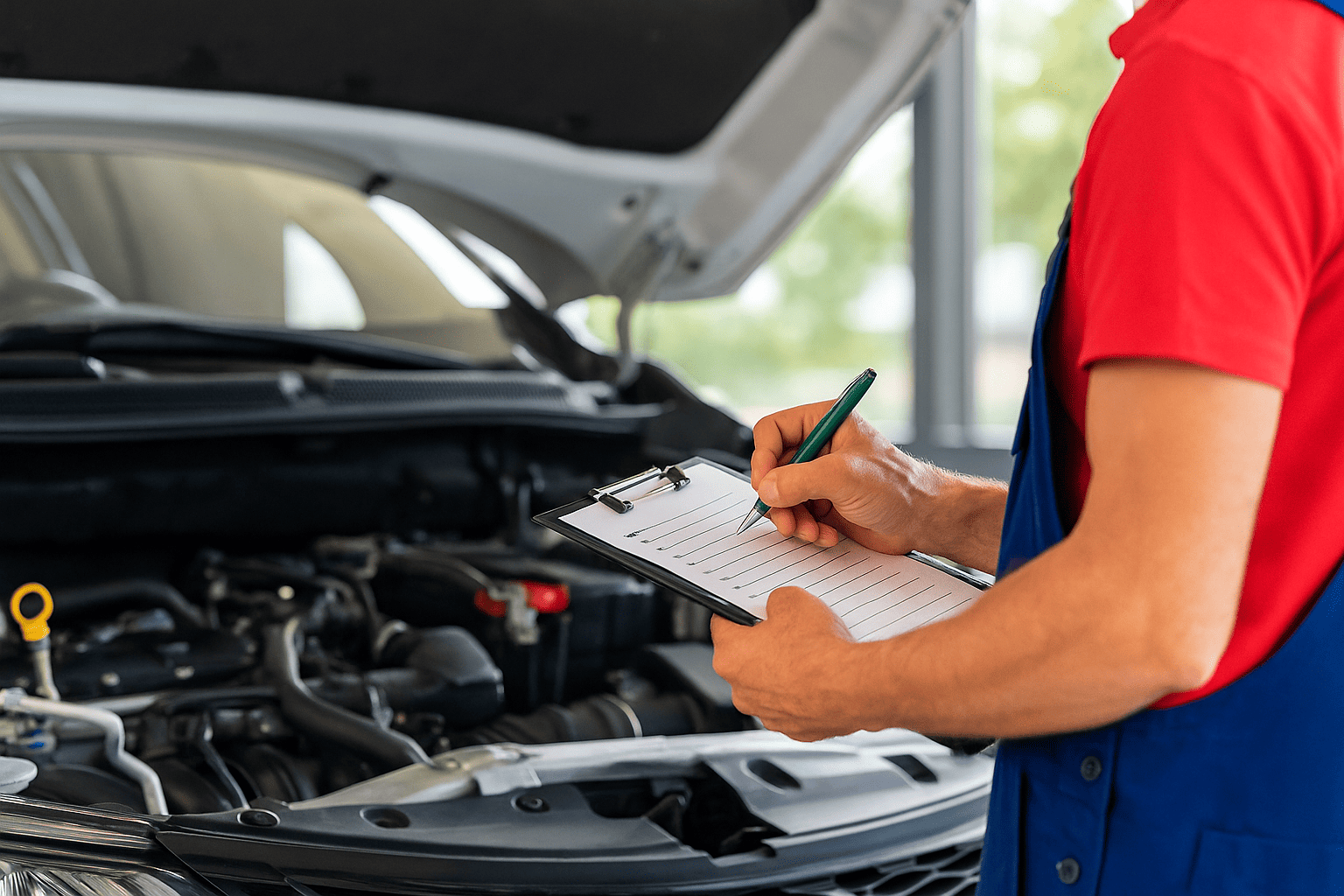
Popping the hood reveals the heart of your potential purchase. Engine fluids serve as vital indicators of how well the vehicle has been maintained and what expensive repairs might lurk ahead.
Essential Fluid Inspections
Oil: should appear brown or black on the dipstick without any moisture present. Amber-colored oil typically indicates a recent change, while milky or frothy oil suggests coolant contamination – a serious red flag.
Transmission fluid: requires checking both color and smell. Healthy fluid appears reddish-pink with an oily scent. Brown or burnt orange fluid accompanied by a burnt odor signals potential transmission problems that could cost thousands.
Power steering fluid and brake fluid levels need verification. Both should be topped off according to reservoir markings, with no visible leaks beneath the vehicle.
Radiator and Component Assessment
Inspect the radiator for leaks, discoloration, rust, or mineral buildup near joints. Inspect all hoses by hand, palpating for soft spots, cracks, or brittleness indicative of impending failure.
Belts and hoses inspection involves checking for fraying, cracking, or glazing on drive belts. Squealing sounds during startup often point to worn belts requiring immediate replacement.
The Critical Role of a Test Drive in Used Car Inspection
A test drive in an old car will bring to light mechanical faults that won’t become evident from inspection. Your non-moving checks may not detect transmission malfunctions, engine quirks, or brake malfunctions that only become apparent during operation.
Listen Carefully
Pay close attention to unusual sounds on your test drive:
Knock sounds from the engine, particularly during acceleration
Grinding sounds when braking or gear shifting
- Squealing belts or atypical steershock vibration
- Rattling that intensifies at specific speeds
Test the Transmission
Test the transmission by driving through various speed ranges. Automatic transmissions should shift easily without hesitation, and manual transmissions should not grind or resist gear shifts. Test how well the vehicle accelerates from rest.
Brake Testing
Brake testing involves paying close attention to stopping power and vehicle response. The car needs to brake straight without swinging towards the right or left, and the brake pedal should be pressed with the same amount of pressure. Hard or spongy brake pedal travel indicates potential failures in the brake system that can put your safety at risk.
How to Give a Test Drive on a Used Car
To successfully go for a used car test drive, take it in all the conditions:
- City roads
- Highway speeds
- Parking lot maneuvers
This way, you’ll be able to successfully evaluate the performance potential of the vehicle.
Steering Clear of Used Car Traps
Knowing the red flags will help you avoid wasting thousands of dollars on surprise repairs and guard against automobile safety hazards with used cars.
Watch for these critical warning signs that signal potential problems:
Major Red Flags to Avoid:
Evil panel misalignments, door, hood, and trunk (used as bodywork damage upon impact)
Drips of oil on the ground when the car is stationary (engine, transmission, or brake problem)
Water damage indicators on cars, such as mildew smell, water stains, or rust in other places
Misaligned paint colors are typical of bodywork.
Atypical rust development, particularly in the door frame and wheel well pieces
Your gut is more valuable than cash when learning how not to purchase a lemon vehicle. If something doesn’t feel right during your inspection or test drive, don’t disregard your first impression. Aggressive dealerships that avoid questions or give evasive answers regarding the car’s history typically have something to conceal.
A thorough used car checklist is your protection against such snares. This checklist system helps you avoid missing critical data that will pay off later. By doing each process with attention to detail, you’re gaining confidence in your buying decision and avoiding costly surprises.
Why Choose Professional Car Repair Services Like HCS Auto Repair
Whereas your pre-buy checklist can uncover glaring flaws, there are flaws that only a professional can discover. We have been an institution in Springdale, AR, since 1988, with a reputation for quality auto repair and car care. Their ASE-certified technicians apply years of experience to every inspection, from basic oil changes to cutting-edge transmission service.
When you require a professional full-service inspection or post-purchase vehicle repair work, HCS Auto Repair’s dedication to building customer trust is what makes them different. Their attention to detail within their car maintenance operation provides reassurance that you’re not just receiving a superficial once-over – you’re receiving the assurance of security of dealing with the experts who treat every customer like a friend forever.
Choose HCS Auto Repair
A comprehensive used car pre-purchase check-list is your insurance against costly surprises and safety threats. By systematically checking each aspect of an automobile, from looks to engine condition, you are providing yourself with a sense of security and protecting your hard-earned money. This systematic process turns what may be a frustrating buying experience into a safe and informed decision.
When you need professional work after your original inspection, HCS Auto Repair is here to assist you through your used vehicle purchase. From a thorough pre-purchase inspection to routine maintenance on your new ride, our ASE-certified technicians provide years of experience to every job.
Ready to roll? Book auto repair or a professional inspection by calling (479) 751-8232. Our Springdale, AR crew treats every customer like family and will ensure your vehicle receives the attention it deserves.
With your pre-purchase checklist knowledge and the proper professional guidance, you are prepared for profitable car purchase adventures. Good luck in your search, and you can have your dream car that takes care of you for years to come!