
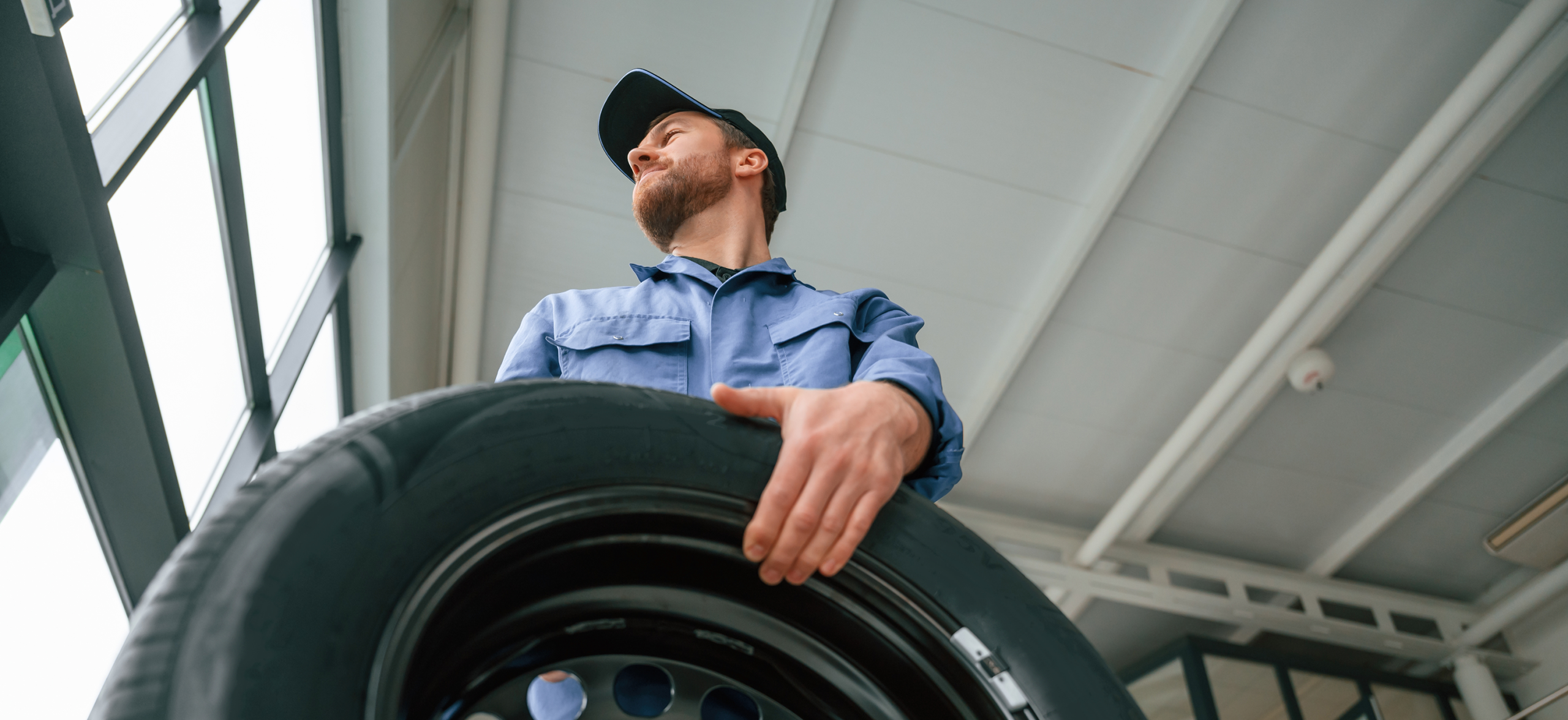
Tire rotations are a job some drivers scoff at as unnecessary or an outlandish expense. But this critical maintenance procedure is essential to your car’s performance and lifespan.
Here at our professional car repair shop, we get many questions regarding whether tire rotation does anything or not. The answer is that it does. Your tires are subjected to alternating stresses based on where they are on your car. Without rotating tires, the differential wear and tear will contribute to the necessity of replacing your tires sooner, decrease the grade of your car’s performance, cause inadequate traction when driving in wet road conditions, and result in the likelihood of tire failure.
Think of tire rotation as a question of giving each tire “its turn” to support the load. Switching them over into different locations, you distribute wear patterns to all four tires, saving life and reducing loss of performance.
Let’s examine more closely how tire rotations function and why they’re so important to your car maintenance.
Learning about Tire Rotation
Tire rotation is a method of swapping your vehicle’s tires to a different location to distribute wear. The specific rotation pattern depends on your vehicle’s drivetrain type:
1. Rear-Wheel Drive Vehicles:
- Front tires cross to opposite sides of the rear
- Rear tires move straight forward
2. Front-Wheel Drive Vehicles:
- Rear tires cross to opposite sides of the front
- Front tires move straight back
3. All-Wheel/Four-Wheel Drive:
- Follow rear-wheel drive pattern
- Cross tires to the rear
- Move rear tires straight forward
4. Special Tire Configurations
Directional Tires:
- Identified by arrows on the sidewall
- Can only rotate front-to-back
- Must maintain specified rotation direction
Staggered Setups:
- Different tire sizes for front and rear
- Limited to side-to-side rotation only
- Common in luxury and sports vehicles
The correct rotation pattern prevents uneven wear caused by varying stress points. Every wheel position has its own distinct wear patterns caused by driving forces, weight distribution, and steering. Rotation distributes these forces equally across all the tires so that they wear longer and operate at their optimal level.
Rotation is only possible for staggered sets of directional tires – these tires cannot be rotated at all. This type of configuration needs special care for tire wear and may have to be replaced more frequently.
Why Tire Rotations are Totally Necessary for Your Car
Your tires in your vehicle experience varying stresses depending on where they are. Consider a rear-wheel drive vehicle – the front tires bear the weight of the engine, putting massive stress on these tires. They also take the forces of steering, which lead to abnormally different wear patterns when you corner and turn.
The back tires have issues as well, though. They bear less of the load of the vehicle, so they are less loaded and may be more likely to bounce around due to the lighter load. But they still face the driving forces of acceleration, which cause their own wear pattern. Back tires also have to face side-to-side deflection in turns, which affects the wear pattern of the tread over a period of time.
Unless you switch them up from time to time, these conflicting forces produce uneven patterns of wear. You can expect to experience quicker wear on your front tires since you also support the weight of the engine. Your drive wheels will tend to grow odd patterns of tread, depending on the drive type of your car: front-, rear-, or all-wheel drive. What this all amounts to is that two tires will almost always wear out long before the rest, resulting in unnecessary and uneven tire replacement.
The Financial Impact
Tires rank among the most expensive car maintenance items. A quality set can cost hundreds or even thousands of dollars. By rotating your tires regularly, you:
- Distribute wear evenly across all four tires
- Extend the lifespan of your entire tire set
- Avoid replacing just two tires prematurely
- Save money by maximizing tire life
Tire rotation on a regular basis makes your tires wear out evenly so that you can achieve the highest return on investment. This routine maintenance process avoids the necessity for premature replacement and keeps all four tires in the best working condition for a longer period of time.
When and How Often to Rotate Tires
The ideal time to rotate your tires would be when you are getting your oil changed, and that should typically be every 5,000 to 7,000 miles. If you do it this way, your tires will have sufficient time in each position to gain the advantage of the rotation and avoid any wear becoming uneven.
If you’re having an oil change every 3,000 miles, don’t rotate tires so frequently. Tires take a long time to remain in the same position to wear out evenly. Rotating tires too frequently will do nothing for you and will interfere with the natural pattern of tire wear.
Factors of Tire Rotation Interval
Your driving conditions are an important factor in terms of how frequently you’ll be rotating your tires. For instance, if you mostly travel a lot in heavy urban traffic with a lot of stops and starts, your tires will wear more unevenly and quickly than under regular highway driving, when driving is usually smoother and straight. Traveling on poor or worse-paved roads will also speed tire wear, and tire rotations will need more frequent execution. Additionally, hard braking, hard cornering, or hard acceleration, aggressive driving wears your tires out more and will make you have to switch the rotation schedule. Because of all these problems, you can best take care of your tires to enable them to perform at their best and last as long as possible.
These conditions could cause your tires to wear out quickly and could mean you need to adjust how often you have them rotated. Have a professional mechanic check if your tires will need to be rotated more often when you have your car serviced for routine maintenance.
Tip: Bookmark the date your oil is changed on your calendar or phone planner so that you can have your tires rotated. It is a simple habit that keeps you current with your tire upkeep and extends their life.
The Tire Inspection Process When Rotating
Tire inspection begins with the measurement of tread depth by means of a special gauge. It’s a simple device that gives you the most crucial information about your tire’s state and remaining lifespan.
Key measurements to know:
- 10/32″ – New tire typical measurement
- 4/32″ – Recommended replacement point
- 2/32″ – Legal minimum in most states
Your tires tell a story through their wear patterns. Signs of potential issues include:
- Uneven wear on one side – Possible alignment problems
- Center wear – Over-inflation
- Edge wear – Under-inflation
- Cupping or scalloped patterns – Suspension component wear
Wet weather performance demands special attention to tread depth. At 4/32″ depth, tires begin to lose water channelling ability and hydroplaning is more likely in heavy rain. This measurement is especially important in regions where frequent rain or severe weather is prevalent.
One of the things that a professional inspection includes at rotation is checking for bulges or bubbles in the sidewall, cuts or puncture, age cracking, and correct air pressure.
These inspections assist in identifying possible safety concerns and prepare your tires for continued service following rotation.
Special Considerations Based on Vehicle and Tire Types
Various auto configurations necessitate special tire rotation patterns in order to deliver the best performance. Read on and learn about unique tire setups:
Directional Tires
- Look for arrow markings on tire sidewalls
- Can only rotate front-to-back on the same side
- Designed to channel water in one specific direction
- Avoid directional tires on staggered setups – they can’t be rotated at all
Staggered Tire Setups
- Common in luxury and sports cars
- Different tire sizes for front and rear
- Limited to side-to-side rotation only
- Found in vehicles like Mercedes and certain Lexus models
All-Wheel Drive Vehicles
- Require strict adherence to rotation schedules
- Uneven tire wear can damage expensive drivetrain components
- Replace all four tires simultaneously when needed
- Small tread differences between tires can cause major mechanical issues
Pro tip: For staggered setups, select non-directional tires to maintain rotation flexibility. This allows side-to-side rotation options and helps extend tire life while protecting your vehicle’s performance characteristics.
Proper Installation and Torquing During Rotation
Proper lug nut installation plays a critical role in wheel safety during tire rotations. The process requires careful attention to detail and specific tools to ensure secure wheel mounting.
The Two-Step Tightening Process:
- Initial loosening/tightening with an impact wrench
- Final manual torque check using a calibrated torque wrench
Your technician will first use an impact wrench to remove and snug the lug nuts. This electric or air-powered tool makes quick work of the job, but it’s only the first step. A manual torque check follows to achieve the exact manufacturer-specified torque settings.
Why Manual Torque Matters
Hand-torquing prevents two dangerous scenarios:
- Under-torqued lug nuts that can loosen during driving
- Over-torqued lug nuts can damage wheels or break studs
Pro Tip: Re-torque your lug nuts after every 50-100 miles of driving after a tire rotation. This easy check catches any lug nuts that have loosened up or settled out during the first-time break-in.
Alignment’s Role in Tire Health
Your vehicle’s wheel alignment ranks among the most critical aspects that safeguard your tire investment. Unevenly aligned wheels produce uneven pressure points that speed up tire wear in particular areas. One of the most popular indicators of ill alignment is that tires wear unevenly on one side as compared to the other.
When to Check Your Alignment:
- After hitting significant potholes or curbs
- When your attention is drawn to a particularly hard impact
- Within a week of noticing steering wheel vibrations
- During routine tire inspections
A properly aligned tire means your tires are in constant contact with the road. Even pressure distribution is what keeps your tires wearing out equally, assuring their durability. Alignments may appear like an unnecessary expense, but they are much less costly than replacing tires prematurely because of uneven wear.
A routine alignment check during your annual maintenance visits will detect any issue before it results in permanent damage to your tires. Correct alignment, along with your suspension components, will make your tires perform and last their best.
Choose HCS Auto Repair
Tire rotations aren’t a service – they’re a smart investment in your car’s performance and safety. At HCS Auto Repair in Springdale, AR, our ASE techs have 35+ years of combined experience and are strong when it comes to tire rotations. We use careful protocols, the right torque spec, and detailed inspections to get the most out of your tires.
Your satisfaction and security are what motivate our dedication to excellence. We’re not just looking at you as yet another customer – you’re our relative. Ready to provide your tires with the expert care they need?
Schedule your tire rotation today:
- Call us at (479) 751-8232
- Visit our trusted auto repair shop in Springdale
- Experience service that puts you first
Trust your vehicle to the team that’s been setting the benchmark for quality auto repair since 1988.