
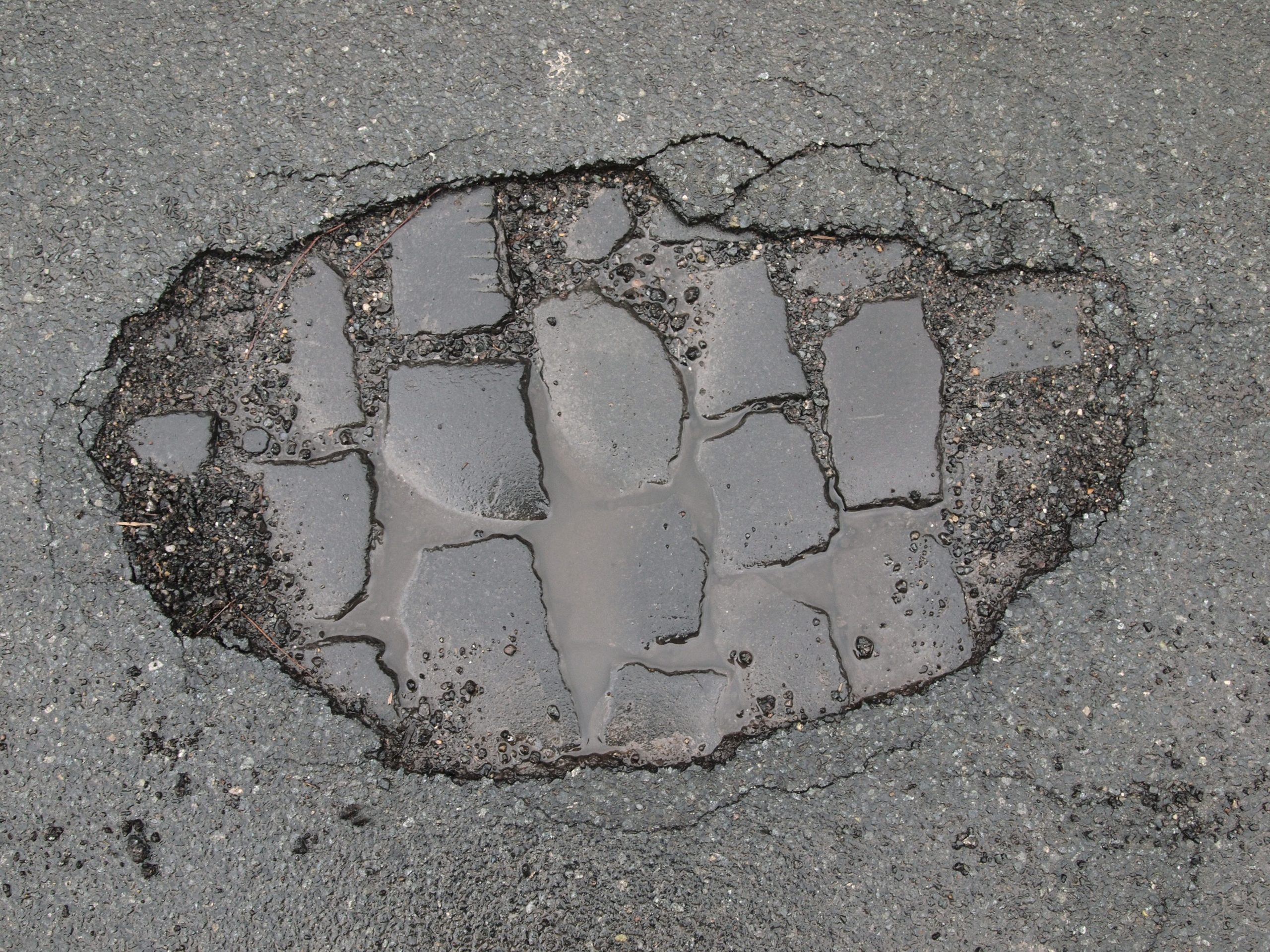
You may have experienced driving on a bumpy road, trying to avoid potholes. Despite your careful driving, it’s possible to hit a pothole and end up with a flat tire. While you might think that replacing the tire will fix everything, this isn’t always the case. Sometimes, other parts of the front end can be damaged, and only a thorough inspection can tell you if your vehicle is safe to drive.
Even after getting a new tire, you might quickly notice that something isn’t right with your car’s performance. The steering wheel may feel off, the car could start drifting to one side, or you might hear unusual noises caused by friction. These are important warning signs that shouldn’t be ignored; acting promptly is essential.
Moreover, upon closer inspection of the affected tire, you may see a gap where the tire isn’t making contact with the strut, indicating a problem on that side. You might also notice that the upper part of the tire is rubbing against the strut, which is another indication of an issue. There is so little room that probably your hand cannot fit in there.
Looking down at the tire, it could be difficult to tell the situation, but with a little more attention, one might be able to spot the impression made on the tire at the top. If you want to know more about the extent of the push-in, you could place a level at the bottom of the tire, and there would be a gap that you would not believe, indicating the amount of the tire’s tilting. Such a misalignment is even perceptible when the wheel is off the ground; normally, the tire should be leaning slightly outward.
The way your car’s suspension hangs could also be telling you something. If it appears to be significantly impacted, that’s a clear indication of trouble. The result is that everything has gotten pushed inward, leading to that annoying inward tilt of the top of your tire. The next step is to remove the wheel to take a closer look and pinpoint the exact issues. This way, you can make sure everything is in good condition, and you can drive safely again.
Further Inspection with the Wheel Off
Upon inspection, you can see where the tire blew out, right here, after hitting the pothole. The tire has also deteriorated from being driven on while it was flat. All the rubber from the inner part of the tire has turned into debris. Eventually, the tire has to be replaced. Moreover, the strut is seen to have a clear bend, and the bracket underneath is pushed in, indicating it has failed. On the other hand, there could be some other parts that are not easily detected as damaged.
Suspension Components and Why You Should Replace Them
Let’s head over to the bench to review some of the suspension components and discuss why you should consider replacing them. Here are all the suspension parts you will be discussing, and you can find them at 1aauto.com.
First, you know the strut assembly needs replacement. Another component that may not be as obvious is the sway bar link. While the link itself might not appear bent, removing it from the strut can often cause the top part to spin and potentially damage the link. Thus, it is a good practice to substitute links whenever struts are replaced.
The knuckle could be out of shape, and even if it is not apparent, there may also be a microscopic crack. This situation could develop into a problem; hence, it would be better if you change the knuckle along with the other parts.
Besides this, the wheel bearing could have suffered some damage due to the considerable force exerted on the tire. The damage might still be hidden, but after a month, the loudness from the wheel bearing can be one of the indicators for its replacement.
Let’s now move on to the lower control arm and ball joint. The extent of the strut bending caused by the accident suggests these parts are also deteriorated. There might be issues inside the components that are not detectable on the outside, but they could adversely affect the vehicle’s performance.
Don’t Neglect Getting An Alignment!
One of the main things to remember is that wheel alignment after major maintenance or repair work is very important. In the event of suspension or wheel problems, wheel alignment becomes necessary. Tire misalignment can result in increased wear of the tires, poor handling, and higher fuel costs. Misalignment makes the tire opposing the car’s directional control, hence making steering harder and even causing unsafe driving conditions.
Scheduling an alignment after vehicle repair guarantees that the wheels are in the correct position with each other and the road, therefore, getting the best performance and safety out of the vehicle. This preventive maintenance has the dual advantage of extending the lifespan of the tires and also providing a more pleasant and more reliable driving experience.
Choose HCS Auto Repair
In the case of alignment and suspension repairs, you will discover that the HCS Auto Repair team is completely committed to giving you outstanding service that is specifically designed for your requirements. Our skilled staff is here for you to rely on to properly determine any problems with the vehicle’s alignment or suspension system.
We know that the safety and comfort factors on the road heavily depend on the proper functioning of alignment and suspension. You can trust the quality of your vehicle’s handling with our expertise and commitment, and drive miles with peace of mind because your alignment and suspension have been expertly attended to. Give us a call today at (479) 751-8232 and schedule your auto repairs!