
February can be tricky for car and truck owners. (As if a harsh winter January wasn’t bad enough!) Winter is technically still here, but this is when it starts pretending it’s over. One day it’s 45 degrees and sunny, the next morning your windshield is frosted over, and your car is doing that slow, sad crank again like it’s asking for five more minutes.
For a lot of people, this is the month their battery finally taps out.
Not during the brutal cold snap in January. Most likely on a random Tuesday in the grocery store parking lot, you turn the key or press the button, and you hear a click. Maybe even a stutter, or maybe nothing at all.
That is most likely what is called winter battery hangover, a phenomenon that mechanics see every year. To understand this better, we can refer to some insights on how cold weather affects your car battery.
Continue reading for a heads up on what’s happening, why February is such a common time for battery failures, what to look for, and what you can do before you get stuck somewhere on the roadside.
The Winter Battery Hangover, In Plain English
A car battery doesn’t usually die in one clean moment. It gets worn down over time.
Cold weather makes a battery weaker right when your car needs more power to start. Thick oil, a cold engine, and more resistance. This means the battery has to work harder.
At the same time, your alternator might not be getting enough time to recharge because you’re driving less, doing shorter trips, idling more, and running everything electrical.
You may have headlights, heated seats, rear defroster, and the front defroster blasting at the same time. Wipers going, phone charging, and the heater fan on high. Sometimes a dash cam, too, and maybe some remote starts. It adds up!
So the battery spends weeks getting hammered, but it survives.
Then February hits. A couple of warmer days trick you into thinking everything’s fine. Except that the battery has already taken damage. Sulfation builds up, capacity drops, internal resistance goes up; so the battery is basically tired.
That’s the “hangover” part. The cold isn’t always at its worst anymore, but the battery is. So you get the failure after the worst of winter, which feels unfair, but it’s kind of the standard timeline.
Why February Exposes The Weak Batteries
There are a few reasons this month is a sweet spot for breakdowns.
1. The battery has been undercharging for weeks
Short trips are brutal in winter.
If you’re doing a bunch of 5 to 10-minute drives, the alternator may never fully replace the energy used to start the car. Starting the engine is one of the biggest single draws the battery sees. If you do that repeatedly without long drives, the battery lives in a semi-discharged state.
And a battery that stays partially discharged is more likely to sulfate. That reduces its ability to hold a charge, permanently.
So by February, the damage is done, even if you haven’t noticed yet.
2. Cold starts are still happening, just less predictable
Even if daytime temps creep up, nights can still be freezing. The battery is cold soaked overnight, then asked to deliver a big surge of current in the morning.
That morning start is the test and it’s often the one that fails.
3. Battery age hits harder in winter
A three-year-old battery in a mild climate might feel fine. In a place with real winter, that same battery can start acting suspiciously by year three.
By year four or five, winter becomes a coin flip. A lot of batteries that would have limped through summer just do not make it through late winter. February is when that shows.
4. Corrosion and loose connections get worse all winter
Road salt, moisture, and temperature swings. Vibrations, too, all of it contributes to corrosion on terminals and grounds.
And here’s the annoying part. A battery can be decent, but if the connection is poor, it will behave as if the battery is dead!
Weak cranks, random no starts, lights flickering, electronics acting on the fritz. Sometimes you just need to clean and tighten. Sometimes the battery is actually failing too, or both. Winter loves a combo problem.
The Symptoms People Ignore Until They Can’t
Most batteries give warnings. They’re just subtle and easy to brush off. Here are the big ones.
Slow crank, even once
If the engine turns over noticeably slower than normal, pay attention. One slow start can be the beginning of the end.
Especially after the car sat overnight.
The “click, then it starts” thing
Sometimes you get a click, pause, then it cranks. That can be low battery voltage or a connection issue.
Either way, it’s nothing.
Lights dim when you start the car
Some dimming is normal, but if your headlights or interior lights dip dramatically when cranking, that’s a sign the battery is struggling to deliver current.
Start stop system stops working
Many cars will disable auto start-stop if the battery state of charge is low or the battery health is questionable.
So if you start and stop suddenly, “never works anymore,” that can be your first warning.
Random electrical weirdness
Modern cars are sensitive. Low voltage makes modules act strangely.
You might see warning messages that come and go. Radio resets. Screen glitches. Power windows are slower than usual. These can be early low-voltage symptoms.
Needing a jump once
If you had to jump-start the car recently, don’t just move on with your life. A jump start is not a fix. It’s a life raft.
Suppose the battery was drained because you left a light on, fine. But if it happened for no clear reason, you need to test the battery and charging system.
The stuff that quietly kills batteries in winter
Some of this is obvious, some isn’t. But it’s what makes February such a mess.
Short trips with everything on
You start the car, crank the heat, blast defrost, drive seven minutes, shut it off. Repeat. The battery never recovers.
If your driving looks like that all winter, you’re basically running a battery deficit.
Idling to warm up, especially in newer cars
This one surprises people.
Idling does charge the battery, but not always efficiently, and not always enough to offset the electrical load you’re using while it idles.
If you remote start and the car runs defrost, heated seats, heated steering wheel, blower on high, and lights on. Your alternator is working, sure, but the net gain might be small. And in some vehicles, it can even be close to break even.
It’s not that remote start is evil. It’s just not a guarantee that your battery is getting topped off.
Parasitic draw
Every modern car has some draw when it’s off. That’s normal.
But if something is malfunctioning, a module staying awake, an aftermarket remote starter, a dash cam wired wrong, a phone charger adapter that never sleeps. That draw can drain a battery over a couple of days, especially when the battery is already weakened by cold.
Corroded terminals and poor grounds
A slightly loose terminal can work fine in summer and fail in winter. Metal contracts. Resistance goes up. Voltage drop increases. Then you hit the starter and everything collapses.
Ground connections matter too. The negative side is not “just the negative.” It’s the return path for current. If the ground strap is corroded, you can chase your tail for weeks.
Old battery, even if it “seems fine”
A battery can seem fine until it isn’t. Capacity loss is sneaky.
You can still have 12.6 volts sitting there and still have a battery that can’t deliver enough current under load. That’s why a real load test matters.
What you should do this week, before you get stranded
You don’t need to overcomplicate it. A few checks can prevent the classic February dead battery scene.
1. Look at the battery age
Most batteries have a date code sticker or stamp.
If your battery is:
- Under 2 years old, it should generally be fine unless something else is wrong.
- 3 years old, it’s in the danger zone for cold climates.
- 4 to 5 years old, you’re living on borrowed time.
- Over 5, you’re basically daring it.
Not a perfect rule, but it’s a good first filter.
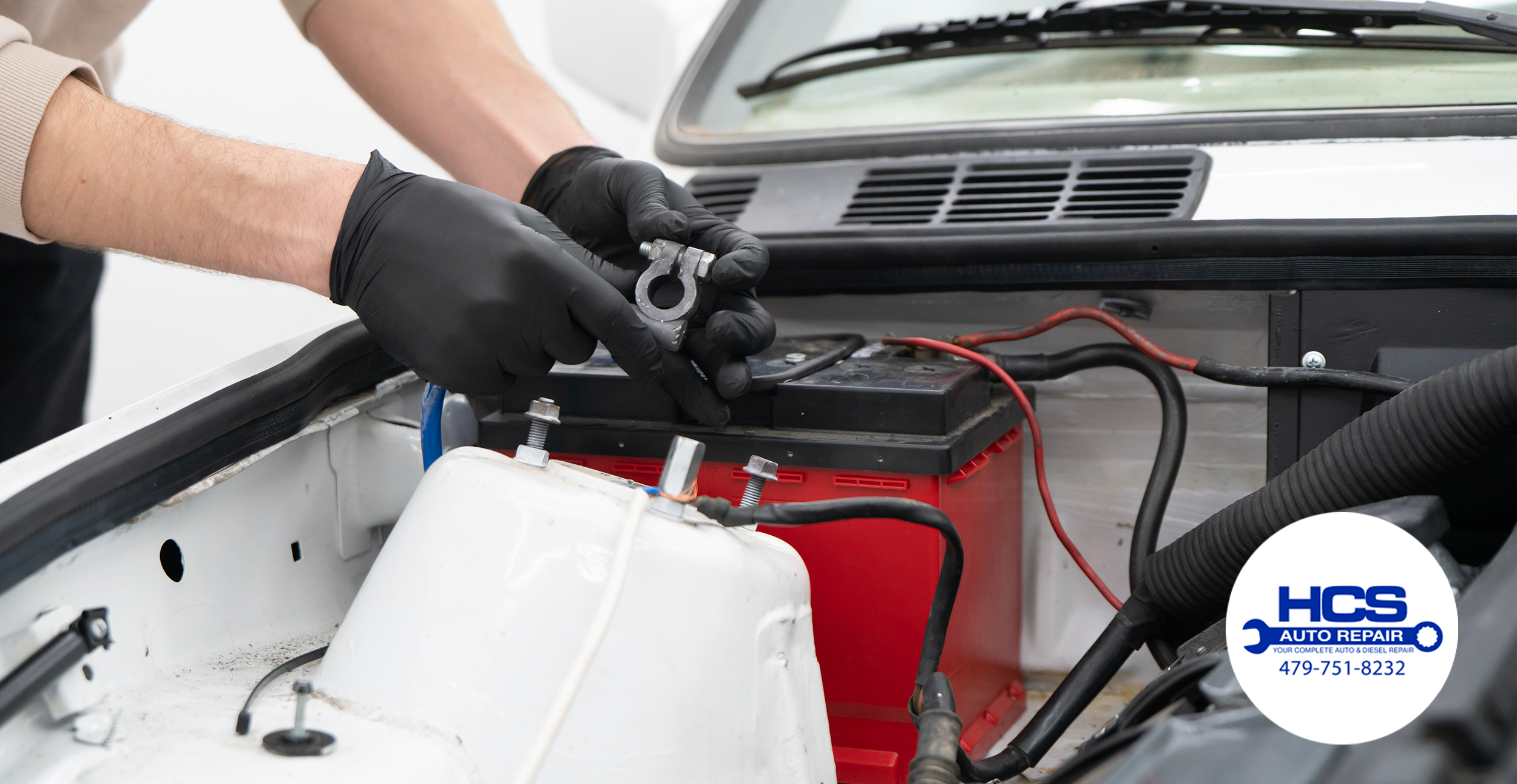
2. Clean and tighten the terminals
Turn the car off. Make sure you know what you’re doing, and if you don’t, ask someone who does.
But in general, check that the terminals are tight and not crusted with white or greenish corrosion. A little corrosion is common. A lot is a problem.
Cleaning the terminals and clamps can fix a surprising number of “my battery is dead” situations.
Also, check for the common issue where the clamp looks tight but is not actually tight. You should not be able to twist the terminal by hand.
3. Get a battery test that includes a load test
A simple voltage reading is not enough.
You want a test that measures cold cranking capability or internal resistance. Most auto parts stores can do this quickly. Many shops can test it in minutes. Some newer battery testers are very accurate and will tell you “replace” even when the battery still starts the car. That’s the whole point.
If it tests borderline in February, don’t argue with it. Borderline becomes dead fast.
4. Check the charging system too
If your alternator is weak, you can put in a new battery and still have problems.
A proper test should verify charging voltage and output. Typically, you might see around the mid 13s to mid 14s while running, depending on the vehicle and the battery management system. Some cars vary voltage intentionally. So don’t panic if you see it moving.
But if you’re seeing low charging voltage consistently, or a warning light, get it checked.
5. Think about your driving pattern
People need to drive their vehicle for at least one extended journey every week during winter months when they only take short trips. The battery reaches full capacity after 20 to 30 minutes of charging time. A battery maintainer becomes necessary for cars that remain parked outside during extended times. The maintainer operates as a slow charging device which extends battery life by maintaining constant power to the battery.
It’s one of the best things you can do for battery life if you don’t drive much.
Jump starting is fine. But do it safely.
February is when everybody becomes a jump start expert in a parking lot.
A few quick notes, because mistakes here can get expensive.
- Use good cables or a jump pack. Cheap thin cables can struggle.
- Confirm you’re connecting positive to positive, negative to ground if possible.
- Don’t let clamps touch each other.
- If the battery is visibly damaged, leaking, swollen, or smells like rotten eggs. Stop. Don’t jump it.
- After the jump, drive long enough to recharge, but still get the battery tested soon. A battery that needed a jump might not recover.
Also, if you jump it and it dies again the next day, that’s not bad luck. That’s a failed battery, a charging issue, or a parasitic draw. Sometimes all three, because why not.
If you replace the battery, a few things matter more than people think
Buying the cheapest battery that “fits” is how you get another problem next winter.
Some tips, without turning this into a shopping guide.
Match the correct battery type
Many newer vehicles use AGM batteries. Some use EFB. Some use standard flooded lead acid.
If your car came with an AGM and you replace it with a cheaper flooded battery, you might get weird behavior, shorter life, start-stop issues, or charging mismatches.
Check your owner’s manual or what’s currently installed.
Cold cranking amps matters in winter
CCA is basically how much starting power the battery can deliver in cold temperatures.
More isn’t always necessary, but you don’t want to go lower than what your vehicle requires. In cold climates, going a bit higher can help, as long as it’s the correct group size and fits properly.
Batteries sometimes need registration or reset
On some cars, especially many European brands and some newer vehicles in general, the car’s battery management system needs to be told that a new battery has been installed.
If you skip that, the car may charge it incorrectly, shortening its life. Or you might see warning lights.
This is not universal, but it’s common enough that it’s worth checking before you DIY it.
A new battery will not fix a drain
If something is draining your battery overnight, you will kill the new one too. Maybe not right away, but soon.
So if your battery died after sitting two days, and it keeps happening. Do not just keep replacing batteries. Find the draw.
The process of proper battery disconnection becomes essential for anyone planning to store your car for winter. This process prevents battery drain during storage and protects battery health for extended use. The recent advancements in car battery technology have resulted in researchers developing new technologies which improve battery performance during their entire lifespan. These technological advancements should be evaluated before making a decision to purchase a new battery.
The most common February scenarios, and what they usually mean
Because people ask this stuff constantly.
“My car started fine yesterday. Today it’s dead.”
Classic battery failure. Or a parasitic draw overnight. If it’s cold out, battery failure becomes more likely. Get a battery and a draw test.
“It clicks once. Nothing else.”
Could be a dead battery. Could be loose terminals. Could be a starter issue. But in February, battery and connections are the first place to look.
“I got a jump and it ran fine. Then it died when I turned it off.”
The battery may be completely shot, unable to hold a charge. The alternator is not charging.
Test both.
“My battery is new, but it keeps dying.”
That’s a drain, a charging problem, or a bad connection. Sometimes an aftermarket accessory. This is where a real diagnosis matters instead of guessing.
So why do so many people deal with this in February specifically?
Because winter doesn’t just test your battery once. It grinds it down.
January is stressful. February is the bill.
That’s why the first warm-ish week in February is full of dead batteries. People assume the car should be happier because it’s not brutally cold. But the battery has been quietly losing capacity for months. The moment it has one slightly harder start, or one night of extra cold, it gives up.
And then you’re stuck texting someone for a jump, standing there with your hands in your pockets, pretending you’re not annoyed. You’re annoyed.
What I would do if I wanted to avoid this completely
If you want the practical checklist, here it is.
- Check battery age. If it’s over 4 years and you live in a cold area, plan to replace it proactively.
- Clean and tighten terminals. Seriously. It matters.
- Get a proper battery load test in late winter, even if it starts today.
- If you drive short trips, take one longer drive weekly or use a maintainer.
- If it dies once without an obvious reason, don’t ignore it. Test the battery, alternator, and check for a draw.
That’s it. Nothing fancy.
February is already long enough. At least don’t let a tired battery turn it into a whole thing.
FAQs
Why does February often cause car battery failures even though winter seems to be ending?
February exposes weak batteries because the battery has been undercharging for weeks due to short trips, cold starts still happen unpredictably, battery age impacts performance more in winter, and corrosion or loose connections worsen over time. This combination leads to the ‘winter battery hangover,’ where the battery is tired and more likely to fail after the worst of winter.
What is the ‘winter battery hangover’ and how does it affect my car?
To avoid winter battery hangover issues: limit short trips when possible; ensure longer drives that allow full charging; clean and tighten battery terminals regularly; test your battery health, especially if it’s over three years old; watch for early symptoms like slow cranks or dim lights; and consider replacing an aging battery before late winter hits.
What are common symptoms indicating my car battery might be failing during winter?
Common warning signs include slow engine crank after sitting overnight, hearing a click before the engine starts, headlights or interior lights dimming significantly when starting, the start-stop system disabling itself, random electrical glitches like radio resets or slow power windows, and needing a jump start unexpectedly.
How do short trips during winter contribute to car battery problems?
Short trips prevent the alternator from fully recharging the battery after starting your car. Starting uses a lot of energy, so if you repeatedly drive only 5-10 minutes without longer drives, the battery stays partially discharged. This leads to sulfation buildup, which permanently reduces its ability to hold a charge.
Can corrosion or loose connections cause my car to behave like it has a dead battery in winter?
Yes. Road salt, moisture, temperature swings, and vibrations during winter increase corrosion on battery terminals and grounds. Even a decent battery can act dead if connections are poor. Symptoms include weak cranking, random no-starts, flickering lights, and strange electronic behavior. Sometimes cleaning and tightening connections solves the issue; other times both connection problems and actual battery failure coexist.
What preventive steps can I take before February to avoid getting stuck with a dead car battery?
To avoid winter battery hangover issues: limit short trips when possible; ensure longer drives that allow full charging; clean and tighten battery terminals regularly; test your battery health, especially if it’s over three years old; watch for early symptoms like slow cranks or dim lights; and consider replacing an aging battery before late winter hits.